
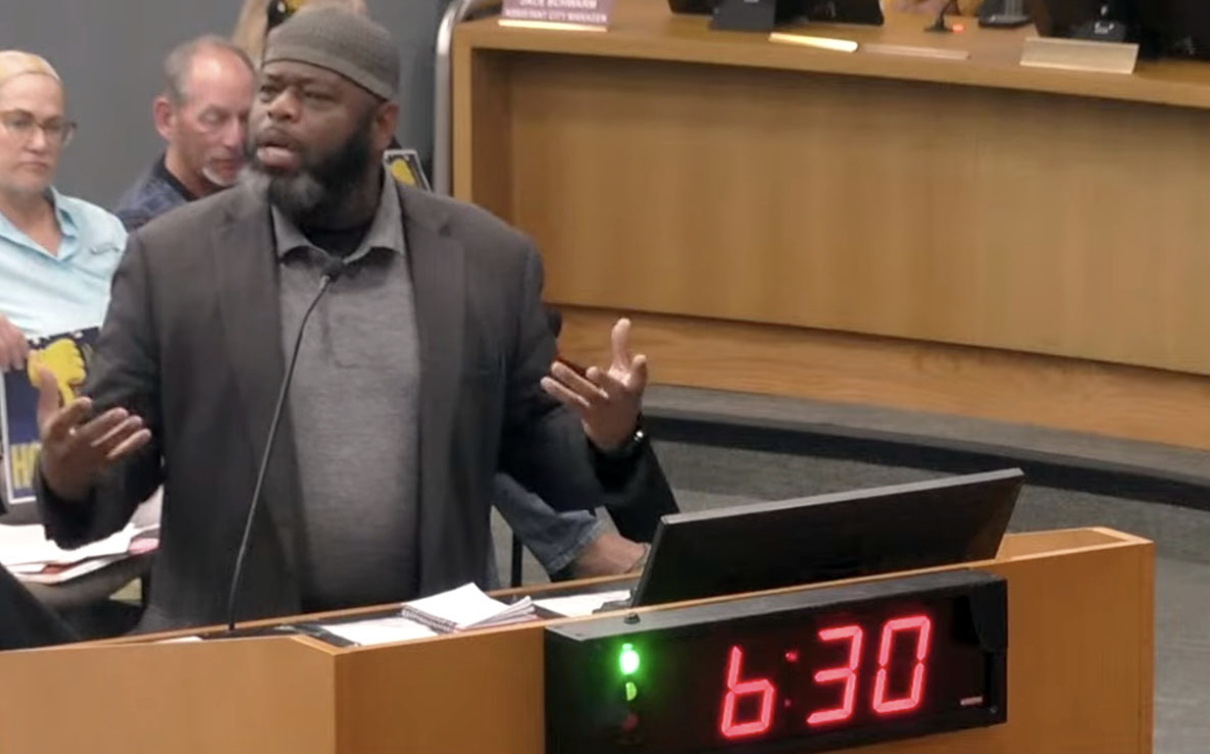
At the April 22, 2026 Encinitas City Council meeting, residents demanded accountability for Steven Houbeck’s racially demeaning remarks and questioned whether he should remain on the Urban Forest Advisory Committee. But instead of focusing squarely on the harm described by residents, much of the council discussion turned toward the people speaking up. This meeting was shockingly revealing.
Residents came forward with painful, deeply personal testimony about racism, exclusion, and the real harm caused by Houbeck’s online remarks. They described what those words meant in the context of their own lives, their children’s lives, and the broader message sent when someone who speaks that way is allowed to remain in a city-appointed position.
And yet the majority of councilembers seemed far more troubled by the people speaking up than by the conduct that brought the issue there in the first place.
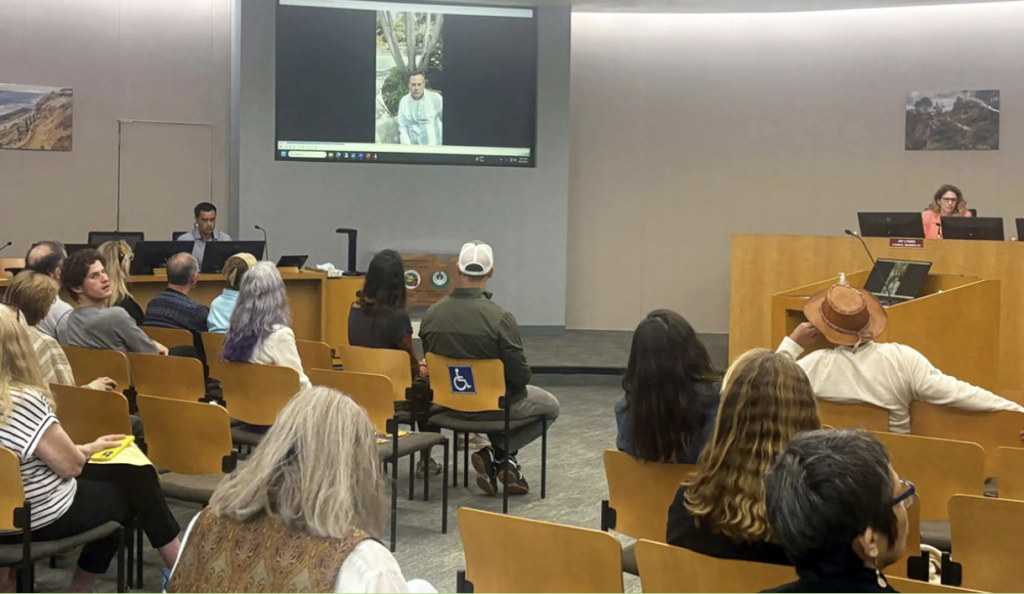
Mayor Ehlers acknowledged that Houbeck’s language was “insensitive and demeaning,” specifically pointing to terms like “blacks,” “tribal gear,” and “banging on drums.” But he quickly pivoted to defending the sufficiency of Houbeck’s alleged apology, minimizing claims of a broader pattern of racism, and urging the city to treat the matter as a “teaching moment.” And he denied knowing about the many other examples of Houbeck’s racist posts, despite having been shown several. That framing landed with a thud. When residents are telling you they feel dehumanized, the instinct to reassure the offender rather than the offended is not wisdom. It is tone deafness dressed up as moderation.
Deputy Mayor O’Hara took the same basic route. He said nobody on the dais agreed with Houbeck’s original post, but then reduced the issue to whether an apology had been offered and whether others chose to accept it. In context, O’Hara’s repeated comments that you can’t force someone to accept an apology sounded like dismissal. The question before the council was not whether O’Hara personally felt ready to move on. The question was whether a city appointee who made racially demeaning remarks should continue serving in a public-facing role.
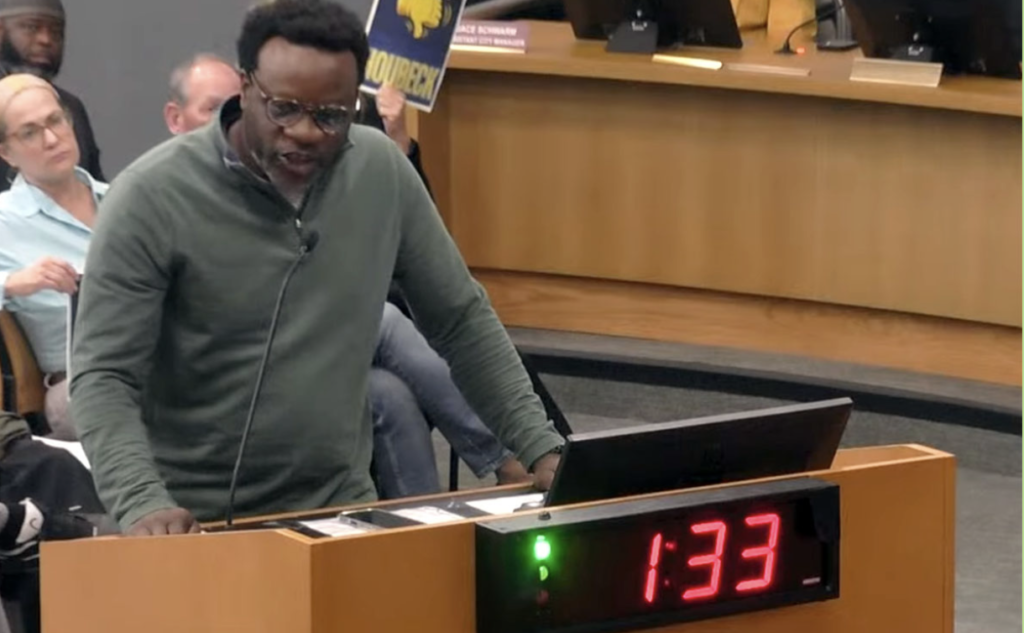
Luke Shaffer was perhaps the most tone-deaf example of a councilmember missing the point. Rather than truly hearing the residents who came to speak about the harm done, he spent much of his time attacking “the same individuals” and “a really divisive group” that he said repeatedly shows up with the sole goal of creating conflict and division.
That is a familiar political move: when the facts are uncomfortable, pathologize the people who bring them. But calling people divisive does not make them wrong. More importantly, it assumes that division starts when residents speak about harm, rather than when the harm occurs. That perspective is exactly backwards.
This issue is divisive because Houbeck’s remarks were divisive. To treat public outrage as the real problem is to blame a fire alarm for the fire.
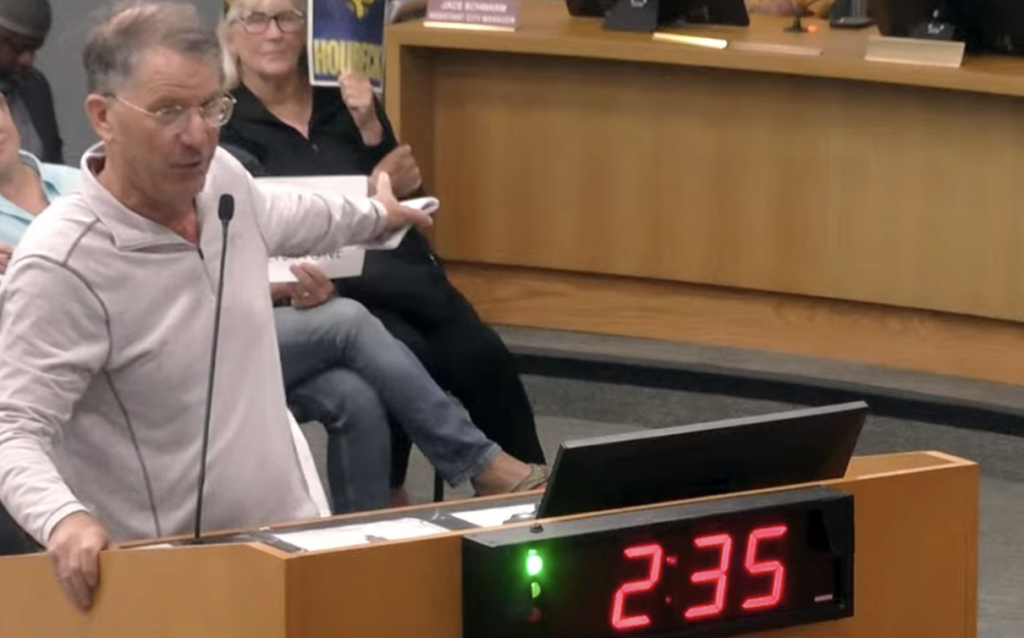
Councilmember Joy Lyndes, who brought the item to the agenda in frustration after weeks of Mayor Ehlers ignoring residents’ pleas, understood that much. She explicitly pushed back on the scapegoating of constituents, reminding the dais that these are residents and voters, not some abstract nuisance class to be waved away. She called the council’s posture “tone deaf” and she was right.
And then there was Councilmember Marco San Antonio, who in the end did what too many politicians do in moments like this: avoid the moral clarity of action while trying to conceal it within language of concern.
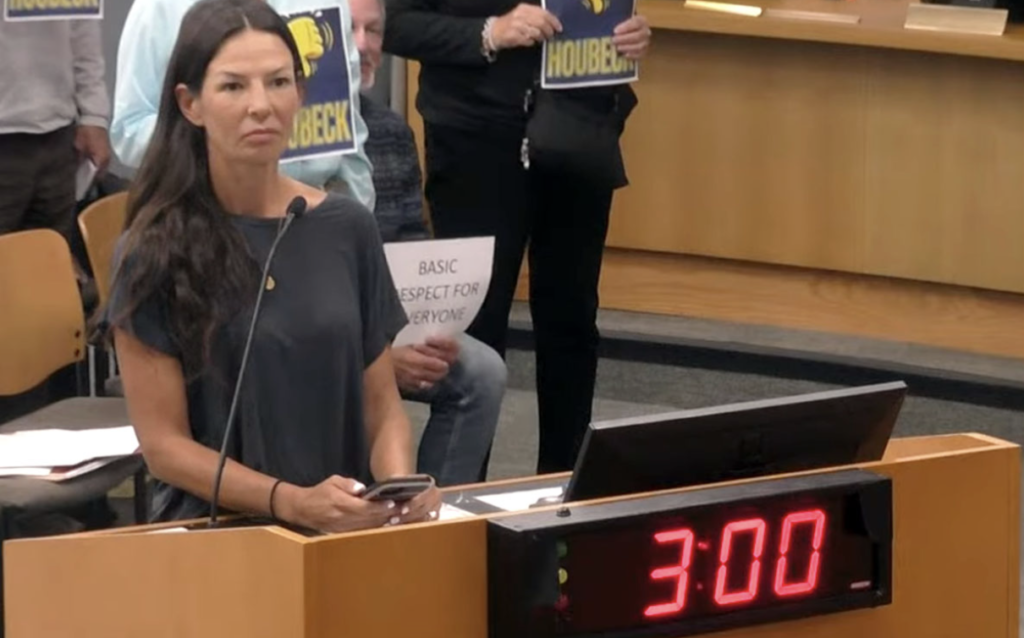
Councilmember Lyndes‘ motion to remove Houbeck died for lack of a second. That matters. Because when the moment came to act, the council majority chose not to.
That is the real story here.
Not that residents were emotional. Not that speakers were angry. Not that some people in town are tired of controversy. Of course they are. The real story is that multiple councilmembers heard residents describe humiliation, fear, exhaustion, and the normalization of racism — and still seemed more animated by the alleged incivility of critics than by the original conduct of a city appointee.
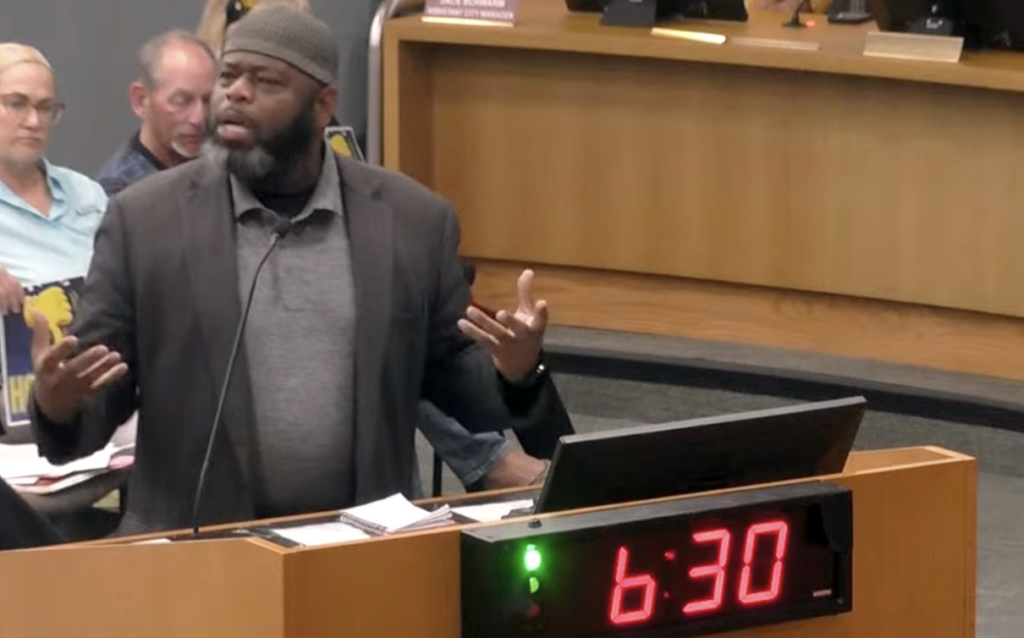
Encinitas deserves better than leaders who confuse accountability with division.
Public criticism is not the problem. Calling out injustice is not the problem. Refusing to stay quiet is not the problem.
The problem is a council majority that prioritizes its own discomfort over the public’s pain. And alarmingly on Wednesday night, too many members of the Encinitas City Council showed their true colors.