
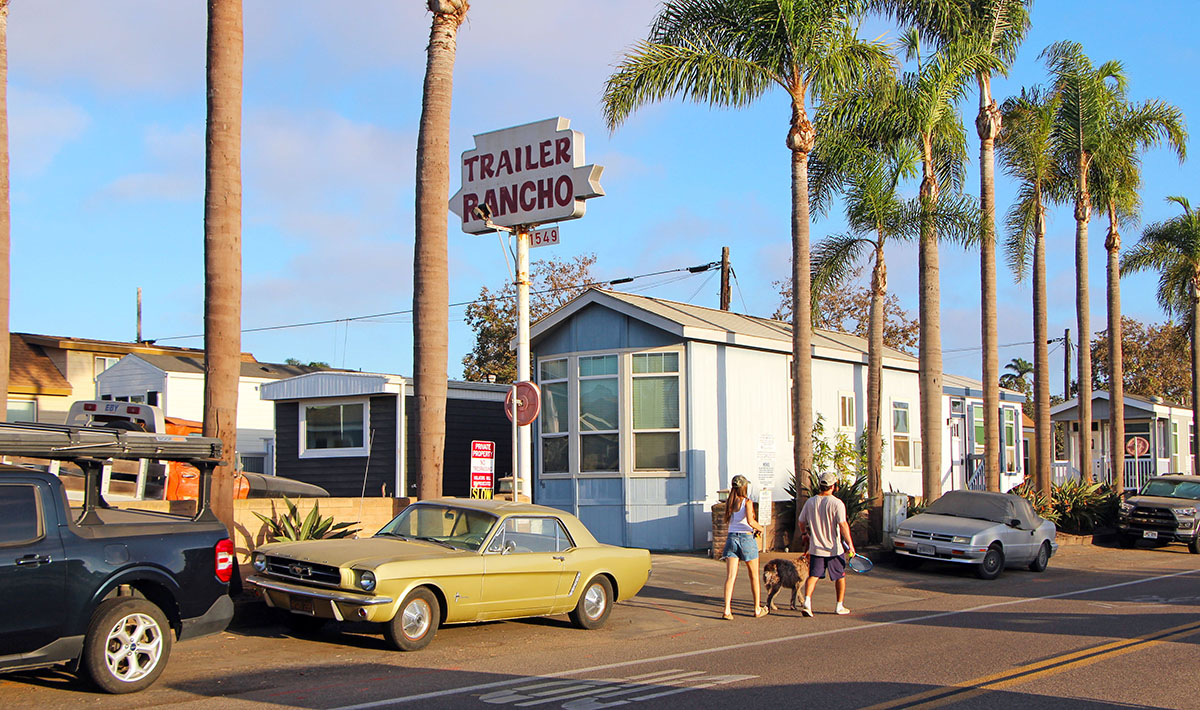
One of Encinitas Action’s focus areas is housing, which includes preserving our existing naturally occurring affordable housing and preventing predatory landlord practices. Consistent with our mission, we want to alert you to an important housing item on next week’s council agenda – Manufactured Home Park Land Leases.
On November 1, some Encinitas manufactured park homeowners will get a ~17% increase for the ground underneath them.
They can’t move the house. Selling it is hard when the rent for the ground increases at such a high rate. And right now, no state or city law caps what that ground can cost. Research indicates that less 5% of those residents are able to move.
Next Wednesday, October 14, Mayor Ehlers brings an item to council (#14A) asking staff how Encinitas can protect its manufactured home parks. One question on the table: can the city pause space-rent increases now?
How this actually works
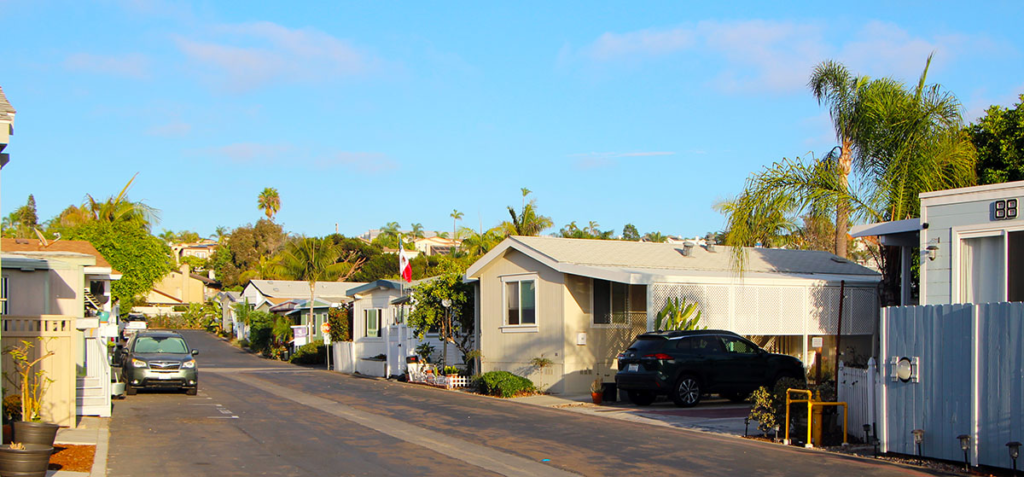
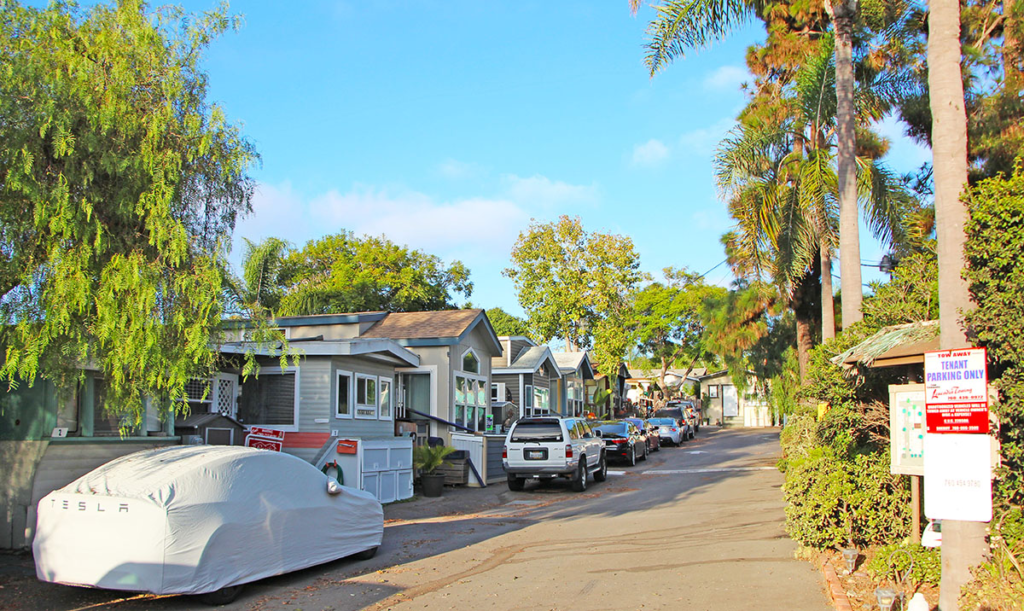
In a manufactured home park, residents buy their home and rent the space under it. Most older homes can’t practically be moved. So, when the space rent jumps, there’s nothing to negotiate and nowhere to go.
It also hits their savings. A buyer prices the space rent into the offer. Every rent increase lowers what the home is worth. The City’s agenda report points out that some homes are now “under water.”
These homeowners also fall through the cracks of state law. California’s statewide rent cap doesn’t cover them. Since nothing in Sacramento covers them, it’s left up to cities to act. Oceanside has had a manufactured home rent ordinance since 1982, and Chula Vista, Escondido and Santee have them, too. Encinitas has none.
The numbers
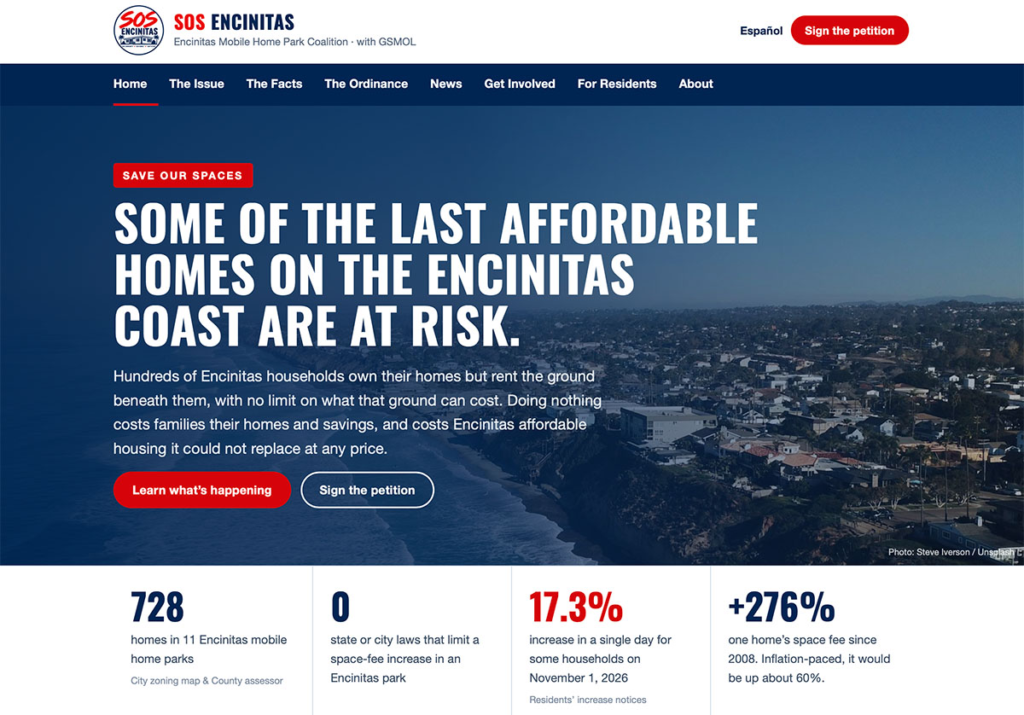
Residents pulled their own rent statements, and the numbers are steep:
• At the Riviera community (seen above), a homeowner paid: $631 a month in 2008, it’s $2,372 today. That’s up 276%. If it had tracked San Diego inflation, it would be about $1,009.
• This year: Riviera residents report increases of 16.5–17.3%. San Diego inflation was 2.7%.
• Selling out: One seller says the park quoted the buyer’s rent at $2,950 in writing, then raised it to $3,300 once the sale was in escrow.
The people affected
A 74-year-old disabled veteran has lived at Riviera for 34 years. He was told his rent would never outpace the cost of living. Now he writes: “If it goes up again next year at this rate, I will be forced out of my home.”
A 25-year resident cares for her 82-year-old husband, also a disabled veteran: “Our quality of life is in food lines now just to be able to pay the increase.”
A single mother of five years: “My trailer represents essentially all of my savings.”
Why neighbors should care
• It’s the most cost effective, affordable housing we have, because it’s already built. The City’s Housing Element counted 844 manufactured homes (2017 estimate), about 3% of our housing, a far larger number than all other affordable units in Encinitas.
• It houses our workforce. Tradespeople, working families and retirees live in these parks. They’re the people who staff and support local businesses.
• A good ordinance isn’t a freeze forever. Well-built ordinances tie yearly increases to inflation. They also guarantee park owners a fair return through an independent hearing. Owners still get raises, and residents can plan ahead.
• Another California city has already done this. Fortuna’s council voted 4-1 in September 2025 to adopt an urgency moratorium. This April it followed with a permanent ordinance: increases capped at 5% a year and tied to inflation, and no increase when a home is sold.
What’s actually on the agenda (and what isn’t)
This agenda item is direction to staff, not a vote on a moratorium. Council will decide whether to ask staff five questions:
• Can rents be frozen at January 2026 levels?
• Could the City do that with an urgency ordinance?
• Which parks are affected, and how are they zoned?
• What notice does the law require?
• What should a fairness ordinance look like?
Staff would come back “at a future meeting.” The report says this wasn’t in the city’s 2026–27 work plan. Land lease control advocates like SOS Encinitas are asking for an urgency ordinance to pause any rent increases until the city can discuss and vote on a permanent ordinance.
Two reality checks:
• An urgency ordinance takes effect immediately, but it needs 4 of 5 votes.
• The November 1 increases will almost certainly land before staff can report back.
🌮 Food For Thought
• If Council agrees this is urgent, will it set a date certain for staff to return, or leave it open-ended?
• Are there four votes for an urgency ordinance? Have the candidates on your ballot said where they stand?
• Park management calls these increases “market rate.” What market applies when your customers can’t leave?
What you can do:
• 📍 Show up or comment: this Wednesday, October 14, 6 p.m., Council Chambers, 505 S. Vulcan Ave. Anyone can speak, whether or not you live in a park.
• ✉️ Write the Council ([email protected]) before Wednesday. Ask for a firm timeline.
This is exactly the kind of local issue that can quietly reshape who’s able to live in Encinitas. For many residents, it isn’t an abstract housing-policy debate — it’s about whether they can afford to stay in the homes they already own. We’ll be watching Wednesday’s discussion closely and will report back on what the council decides.
As always, thanks for reading!
—Encinitas Action