
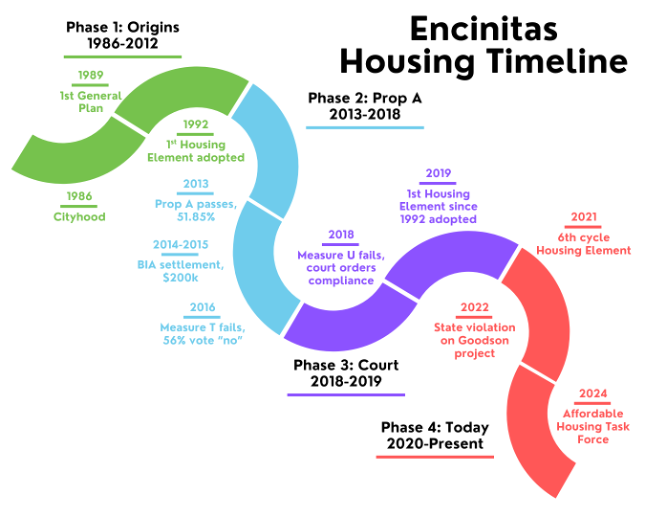
About this timeline: This Encinitas housing timeline traces the local decisions, voter initiatives, and state housing laws that shaped development in our city; this document is not an argument for or against any housing policy, any project, or any councilmember. It is an attempt to lay out factually what happened over time. This overview draws from city records, state housing documents, election materials, court-related reporting, and contemporaneous local news coverage. Where legal or policy disputes were contested at the time, it focuses on the broad sequence of events rather than every competing interpretation. Short on time? Condensed Timeline Here.
These issues are not simple. They sit at the intersection of state law, local politics, zoning, affordability, voter control, and the day-to-day reality of what kind of city Encinitas wants to be.
Encinitas Housing Timeline
Local control meets state housing law, 1986 to today
PHASE 1: THE ORIGINS OF LOCAL CONTROL (1970S–2013)
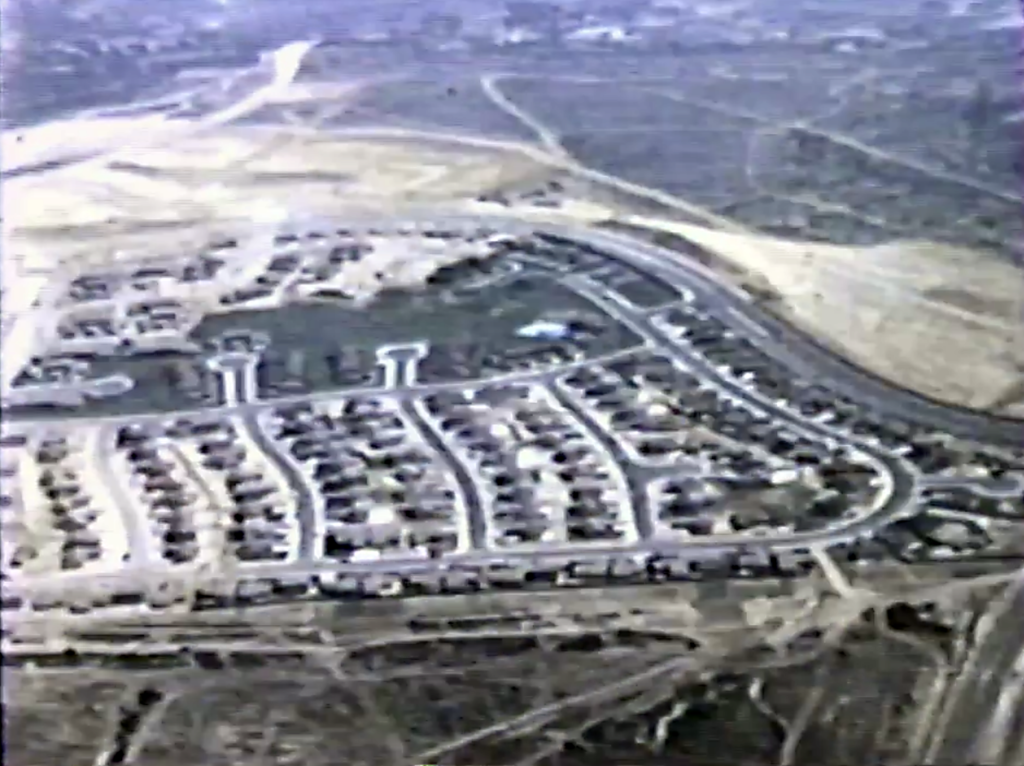

1970S TO EARLY 1980S: SLOW-GROWTH POLITICS TAKE SHAPE BEFORE INCORPORATION

Before Encinitas became a city, Cardiff-by-the-Sea, Leucadia, Olivenhain, Old Encinitas, and New Encinitas were unincorporated communities under San Diego County. Local slow-growth activists argued that county decision-makers were too willing to override local preferences on development and density. That frustration helped produce a distinctly slow-growth political culture long before incorporation became reality.
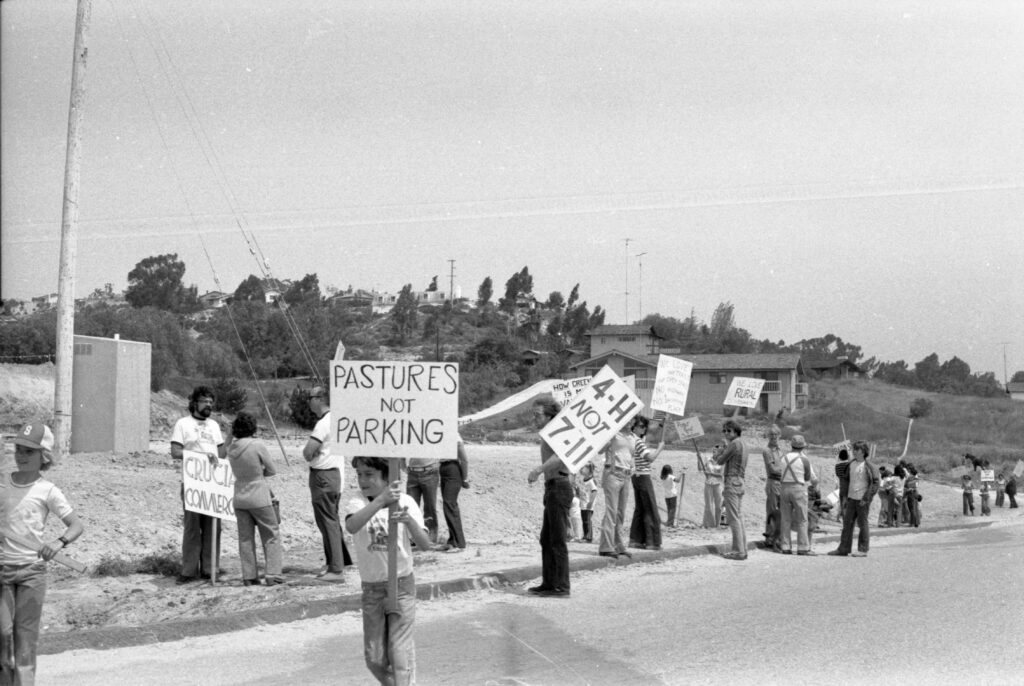
An initial 1982 effort to incorporate as the “Town of San Dieguito” failed, largely in the context of a recession. Even so, the campaign mattered. Several candidates aligned with that earlier slow-growth movement later won seats on Encinitas’ first city council, carrying those same political instincts into the new city government[1].
1986: INCORPORATION TURNS POLITICAL SENTIMENT INTO GOVERNING POWER
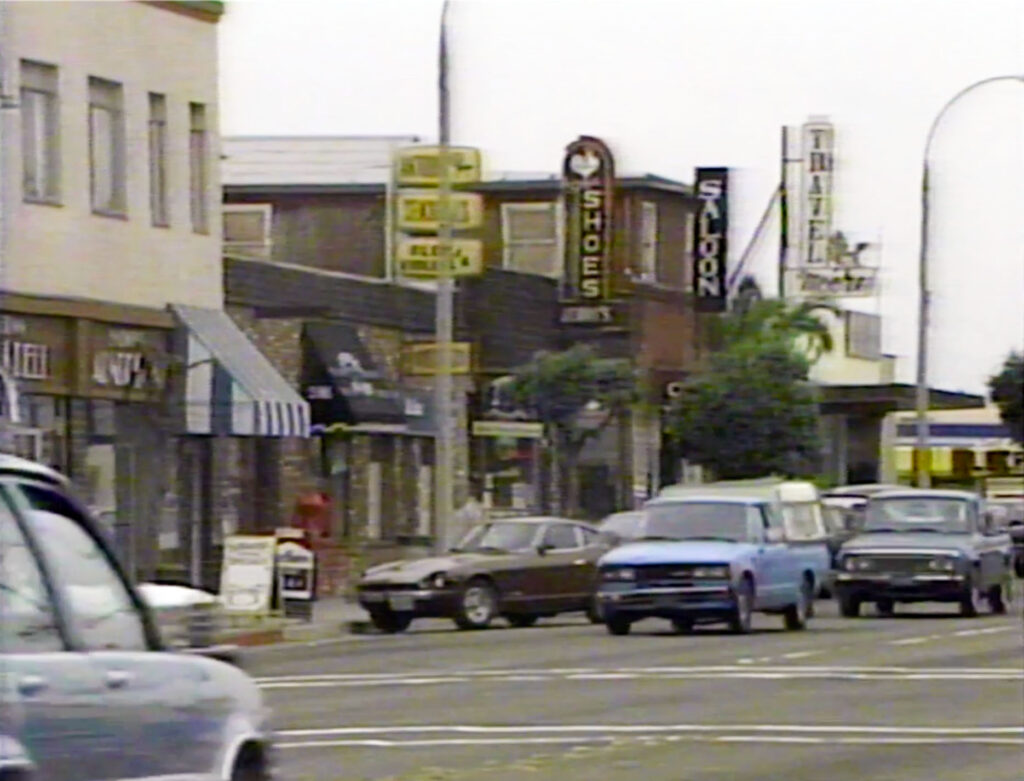
In June 1986, voters approved incorporation and joined the area’s five communities into the City of Encinitas, taking effect in October 1986. The arguments for cityhood were familiar: too much development influence at the county level, too little local accountability, and a belief that growth decisions should be made closer to home.[2]
The new city council quickly acted to slow development, including an early no-growth moratorium that put the brakes on a variety of development projects, both commercial and residential. [3]

1989: THE GENERAL PLAN ESTABLISHES BOTH IDENTITY AND CONSTRAINT
Encinitas adopted its first General Plan in 1989. It was designed to preserve the distinct character of each community while setting residential density ranges across the city. From the beginning, the plan reflected a preference for caution: relatively little land was zoned for multifamily housing, and the document emphasized protecting neighborhood form as much as accommodating future growth.[4]
The original General Plan also included something most residents have forgotten: provisions requiring voter approval for certain zoning density and height increases. However, the city council created a loophole where a super-majority of four (out of five) council members could bypass a public vote and approve zoning density and height increases.[5]
The Downtown Specific Plan and North 101 Specific Plan were both approved unanimously under this “loophole” provision, which allowed for projects with deed-restricted affordable housing units to be built at three stories and 33 feet tall. Resulting projects included Moonlight Lofts (on the northwest corner of Encinitas Boulevard and Highway 101), Pacific Station (on the east side of Highway 101 between E and F streets), and Sema4 (on the corner of Phoebe and Highway 101).
Those decisions later became part of the political case for Prop A. Supporters saw them as evidence that earlier voter protections had been weakened. Critics saw them as proof that the city still needed enough flexibility to address real planning needs.
1989 TO 1992: THE FIRST HOUSING ELEMENT
Encinitas’ very first General Plan included a housing element — and it was immediately challenged in court. In Hernandez v. City of Encinitas, petitioners argued the city had not done enough to plan for its regional housing share. The trial court denied relief on the first two causes of action in June 1990, after it had granted a continuance in November 1989 allowing the City to complete a revision of the housing element of its general plan. The case was finally dismissed in early 1992 and upheld on appeal in 1994.[6]
This 1992 Housing Element became the city’s official housing plan — and remarkably, it stayed that way for decades.
1990S TO EARLY 2000S: A PATTERN OF LATE AND INCOMPLETE COMPLIANCE
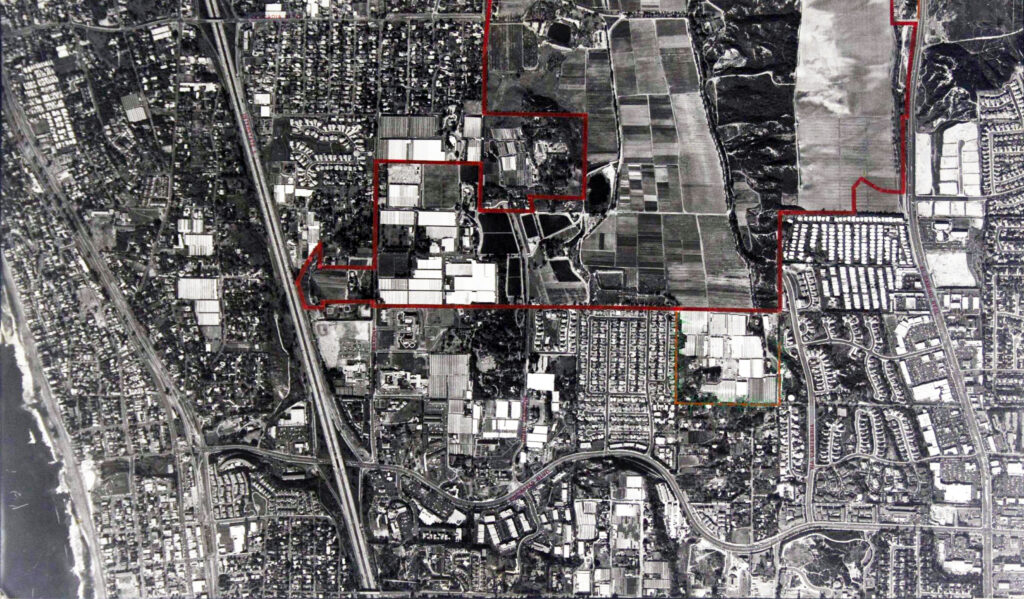
Throughout the 1990s and 2000s, the city continued to struggle with state housing law. A 1995 federal Consolidated Plan noted that in meetings with non-profit and for-profit developers to develop affordable housing, the major block has been the lack of land zoned for multifamily use.[7]
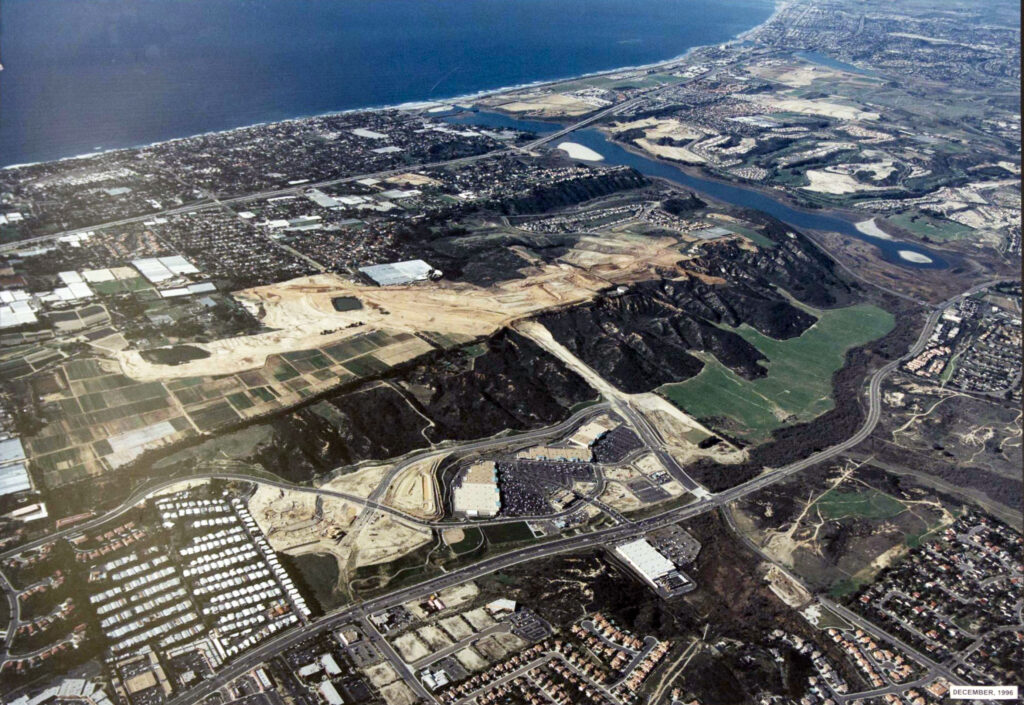
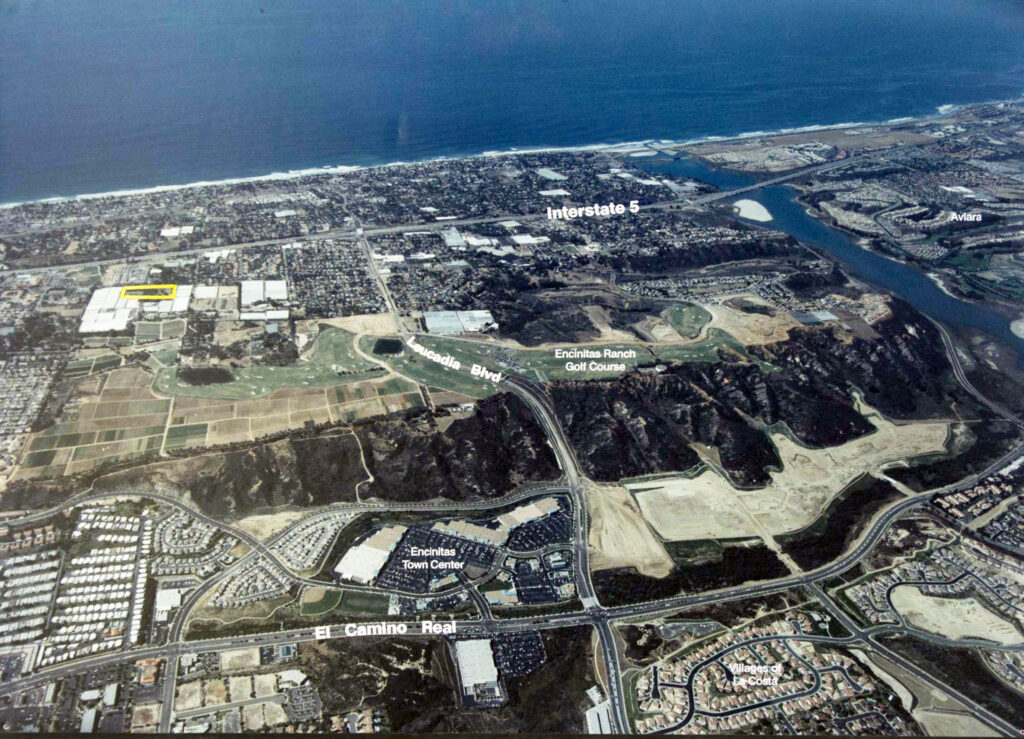
Meanwhile, California began overhauling its housing laws. In 2004, SB 1818 strengthened the State Density Bonus Law, and AB 2348 required cities to identify realistically developable sites and, where capacity fell short, to rezone with “by-right” approval. In 2008, SB 375 tied housing element cycles to regional transportation planning.
The 4th Cycle Housing Element (2005–2010) came and went with the city still leaning on its 1989 General Plan framework. The California Department of Housing and Community Development (“HCD”) required revisions, which the city did not make. The 4th Cycle Housing Element operated without certification. Affordable housing advocates and developers grew increasingly frustrated. The Building Industry Association of San Diego (“BIA”) repeatedly took legal action against city attempts to limit density bonus projects. The 4th Cycle Housing Element’s own data illustrated the underlying problem: between January 2003 and June 2005, the city produced 769 housing units, of which 84 were lower-income, against the regional-need allocation of 875 lower-income units.[8]
2012: THE GENERAL PLAN UPDATE COLLAPSES
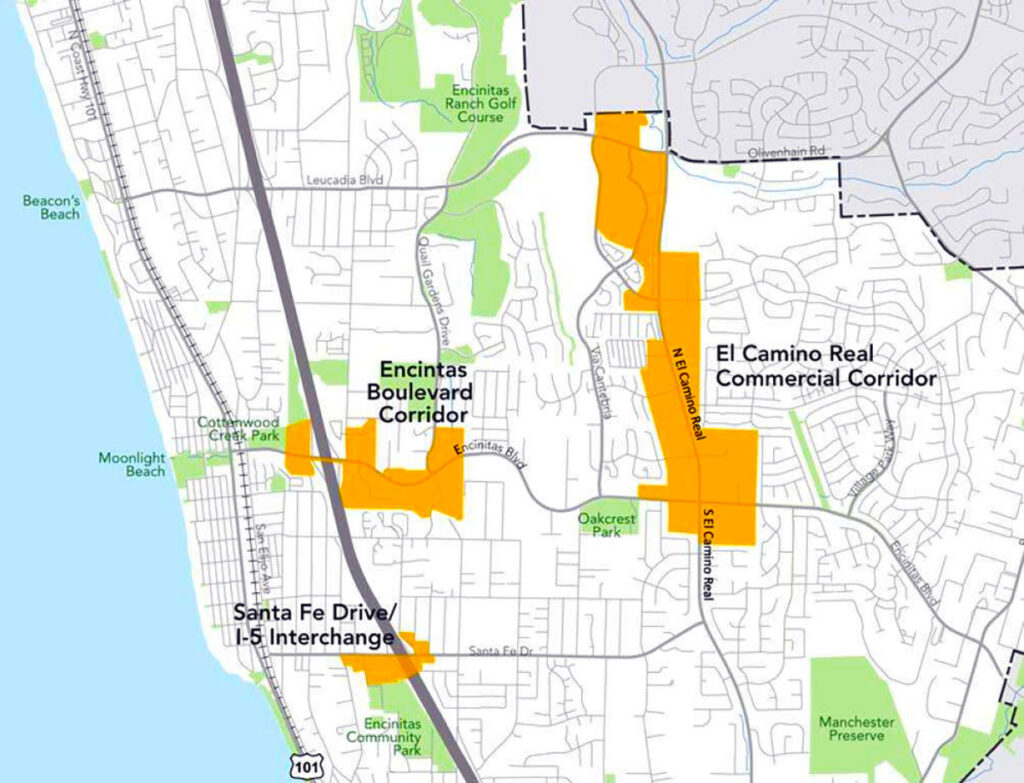
In the years just before Prop A, the city was working on a major General Plan Update. One draft contemplated more than 2,000 additional housing units in the El Camino Real corridor and surrounding areas. The city council was presented with a staff- and consultant-driven draft that essentially re-wrote the original General Plan, without any of the original document included. The council and community pushback reflected that the process had taken a turn that would never be supported.[9]
At that same meeting, Encinitas Mayor Jerome Stocks also pointed out that the state only requires cities to have the proper zoning in place for growth. Whether or not that actually happens according to plan is another matter. “We have to show that we have the capacity, but not one permit has to be issued,” he explained.[10]
That argument — we just have to plan for it, not build it — would echo through every housing debate that followed, and was the predominant attitude with most jurisdictions in the state, which led to significant changes to state housing law throughout the next decade.
PHASE 1: WHY IT MATTERS
- Encinitas was not founded as a politically neutral city. It emerged from a slow-growth movement that treated local control as a safeguard against outside decisions. That local control impulse predates Prop A by decades and still shapes the city’s housing politics.
- Prop A grew out of a long-running argument over whether Encinitas had drifted away from the original promise that residents—not just elected officials—would decide the city’s biggest land-use changes.
- Encinitas did not stumble into non-compliance in 2016. For 26 years, Encinitas operated under a housing element from the early 1990s while the state’s housing laws got dramatically stronger around it.
- By the time Encinitas voters passed Prop A in 2013, the state had already spent nearly a decade building the legal machinery that would eventually make local voter approval an unworkable path to housing element compliance. The legal exposure that exploded after Measure U was rejected was predictable and inevitable under the law.
PHASE 2: PROP A AND THE FIRST MAJOR COLLISION (2013-2018)
2013: LEADING UP TO THE VOTE ON PROP A
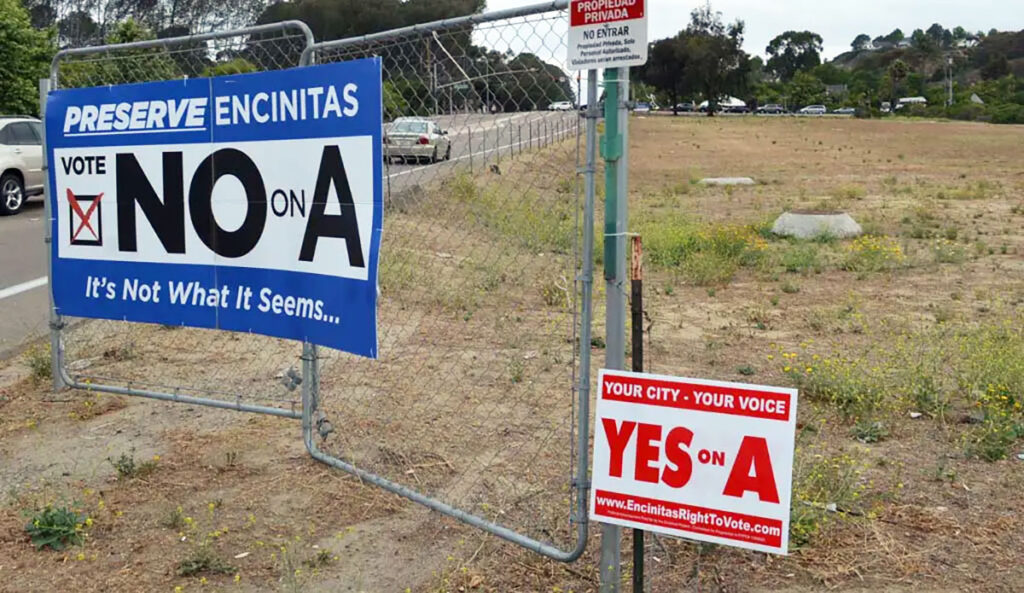
By 2013, frustrations with the city’s development decisions had an organized outlet. The “Encinitas Right to Vote Amendment’,” also known as Prop A, was a citizen initiative whose primary public author was Bruce Ehlers (a former planning commissioner and now mayor) with initiative text drafted by land-use attorney Everett DeLano.[11]
Encinitas’ political leadership initially split over how to respond. Some councilmembers who had initially supported the Prop A petition later argued that the measure could reduce the city’s flexibility and, in some cases, leave the city with less leverage over projects shaped by state density bonus law. The council voted to eliminate the super-majority council vote exemption to require only local voter-approval provisions, but the effort came too late to restore public confidence.[12]
All five city council members publicly opposed Prop A, signing both the ballot argument against and the rebuttal.[13] The city attorney’s impartial analysis told voters the measure “would conflict with a number of city General Plan and Zoning Code provisions, and make more difficult the City’s ability to comply with mandatory State statutory housing requirements.”
Voters approved Prop A in a low-turnout special election held June 2013 by a narrow margin of 6,675 votes for and 6,197 votes against (51.85%)[14]. The measure required voter approval for major amendments to planning documents and imposed a citywide height limit, revoking affordable housing height limit exceptions that allowed for a 3rd story in the downtown and North Coast Highway 101 Specific Plans. Politically, it was sold as a restoration of direct democracy in land-use decisions that would stop growth. Legally, it set up a conflict with state housing law that would become impossible to avoid.
2014 TO 2015: DENSITY-BONUS LITIGATION EXPOSES THE LIMITS OF RESISTANCE
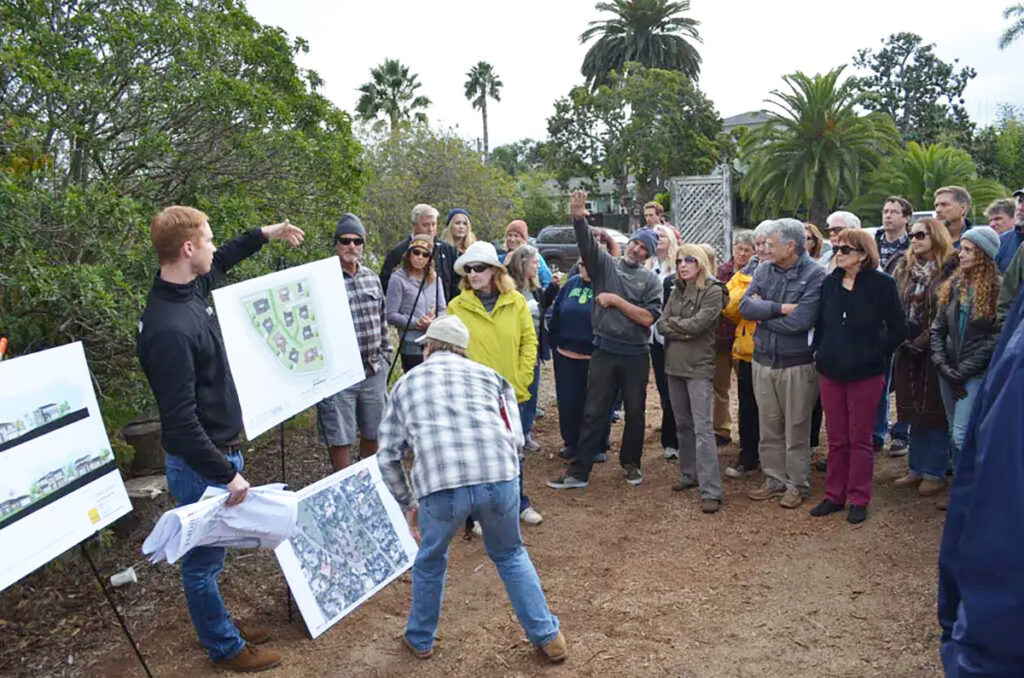
In July 2014, the city council changed how Encinitas would interpret state density bonus law. Among other things, it directed staff to round down fractional base-density calculations and adopted other policies that residents believed would rein in projects seen as oversized or out of character. Supporters viewed the changes as an attempt to restore local discipline. The BIA viewed them as a direct violation of state law.
The BIA sued in 2014, challenging Encinitas’ revised density-bonus policies. The city’s lack of a legally compliant housing element increased its exposure. After an adverse court decision (Banker’s Hill) in another case made it clear that the city would lose, the dispute eventually led to a 2015 settlement and further changes to how the city handled density-bonus rules. The settlement required Encinitas to rescind its July 2014 action and adopt an ordinance intended to comply with state law. Specifically, the settlement required that the city have a compliant 5th Cycle Housing Element (2013-2021) and that the city place a compliant housing element on the November 2016 ballot for voter approval required by Prop A.[15] This ballot measure became Measure T.
2015 TO 2018: FAILED BALLOT MEASURES TURN THE CONFLICT INTO AN IMPASSE
The city tried again to adopt a 5th Cycle Housing Element (2013-2021). Branded “At Home in Encinitas,” it received a conditional letter of compliance from HCD in October 2015, but the effort still depended on Prop A voter approval of the associated zoning changes.
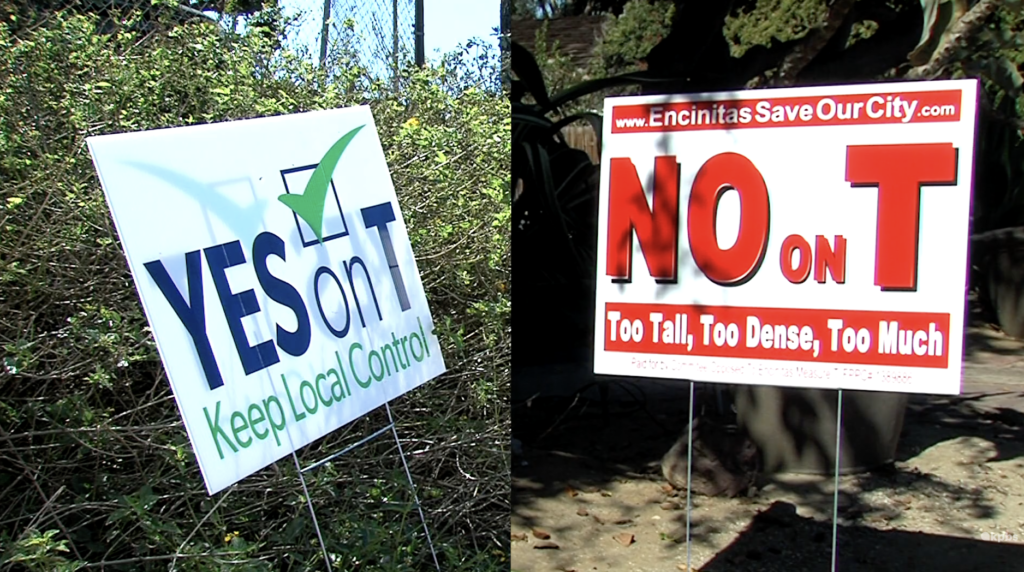
Measure T was on the November 2016 ballot. All five councilmembers signed the ballot argument in favor.[16]Signatories of the argument against Measure T included Bruce Ehlers who identified himself on the ballot designation as “Former Planning Commission / Prop A Spokesperson.”[17] Voters rejected it by a margin of 55.92% against to 44.08% for.[18] After Prop A, the city’s central problem was now fully visible: it needed voter approval to make major housing-related land-use changes, but the same voters were unwilling to approve the changes needed for state compliance.
Litigation arrived from both developers and housing advocates, and both cases landed before Judge Ronald Frazier of the San Diego Superior Court, who handled them together. In April 2018, Judge Frazier stayed the petitions to let the city try the ballot one more time.[19]
The council formed a subcommittee and then a Housing Element Task Force – Mayor Catherine Blakespear, councilmember Tony Kranz, planning commissioner Bruce Ehlers, and former planning commissioner Kurt Groseclose – to redesign the plan. The redesign abandoned the mixed-use corridor approach entirely in favor of purely residential sites at a minimum density of 25-30 units per acre – the “R-30” approach – selected substantially through a solicitation of interested property owners.[20]
In parallel, in August 2018, the council adopted the city’s first inclusionary housing ordinance, requiring new residential projects of seven or more units to provide 15 percent of units affordable to low-income households (or 10 percent at very-low income), with the affordability term set in perpetuity.[21] Inclusionary policy — how much affordability the city can lawfully demand from market-rate development — remains one of the few significant housing levers the city actually controls.
In November 2018, the city tried another ballot measure, Measure U, a housing plan designed to help bring Encinitas into compliance. It failed too, with approximately 53% against and 47% for.[22] By that point, the city had exhausted two major efforts to reconcile Prop A’s voter-approval requirement with the state’s demand for a compliant housing element.
PHASE 2: WHY IT MATTERS
- Prop A became central to Encinitas politics because it promised residents that major land-use intensification would not happen without their consent. What it did not resolve was how that promise would coexist with state mandates.
- The 2014 BIA litigation showed that Prop A did not give Encinitas a workable path around state density-bonus law. The city’s compliance problem was legal, not just political.
- Measure T and Measure U made clear that Prop A prevented Encinitas from carrying out the zoning changes required to satisfy state housing law.
PHASE 3: COURT INTERVENTION AND LIMITS OF LOCAL CONTROL (2018–2019)

2018: THE JUDICIAL BRANCH PLACES LIMITS ON PROP A
After Measure U failed, the plaintiffs returned to court, and, in December 2018, Judge Frazier ordered Encinitas to adopt a legally compliant housing element within 120 days.[23] The ruling did not erase Prop A for all purposes, but it did suspend its voter-approval requirement for that housing cycle. The court’s logic was simple: Encinitas had reached an impasse, and local procedures could not be used to keep the city out of compliance indefinitely.
This was one of the clearest statements yet that local control in housing law has limits. Voters could require a public vote on certain land-use changes, but they could not vote the city out of its state obligations.
2019: ENCINITAS ADOPTS A NEW HOUSING PLAN UNDER COURT PRESSURE
In March 2019, in what was the fastest housing element process in city history, Encinitas adopted a new housing element and related zoning changes to comply with the court order. State recognition of compliance came in October 2019, after Coastal Commission review and further revisions. This court-ordered housing element became the first HCD-certified housing element since 1989.
This 5th Cycle Housing Element rezoned 19 privately owned sites in an R-30 zoning overlay with a minimum density of 25 units per acre and up to 3 stories.
STATE HOUSING LAWS CONTINUE TO GROW AND EVOLVE
By the time Encinitas adopted its court-ordered Housing Element in 2019, the state legal framework had a specific structure that shaped everything that followed. Three provisions did most of the work together.
- The court-ordered R-30 zoning set the base: minimum density of 25 units per acre, three stories permitted, on nineteen sites the voters had declined to approve.
- Under state law and the city’s own rules, a project on one of those sites that included at least 20 percent lower-income units and needed no subdivision map had to be approved “by right” — meaning the city’s review was limited to objective design standards, the project was exempt from environmental review, and the city could not deny it based on density, use, traffic, or neighborhood opposition.[24]
- The State Density Bonus Law let qualifying projects exceed the zoned density and claim waivers of local standards like height, setbacks, and parking, with the burden on the city to justify any refusal.[25] This is why projects on the rezoned sites came in substantially larger than the inventory’s planned numbers.
The state legislature kept building on this foundation. SB 330 in 2019 froze applicable standards once a developer filed a preliminary application and limited how many hearings a city could require. Amendments to the Housing Accountability Act raised the evidentiary bar for any denial. A series of laws in 2021 and 2022 — SB 9, SB 10, AB 2011, and SB 6 — opened additional pathways.[26] And a long-dormant provision known as the “Builder’s Remedy,” which strips a city without a compliant housing element of the power to enforce its zoning against qualifying affordable projects, became a credible enforcement threat as HCD grew more aggressive after 2021.[27]
PHASE 3: WHY IT MATTERS
- The Frazier court did not say Prop A was meaningless. It said Prop A could not operate to prevent compliance with state housing law.
- The 2019 rezoning (the 5th Cycle Housing Element) was done under court order. The 19 R-30 sites that shaped every housing project since were the direct product of that order, rather than by unconstrained council or voter choice.
- Compliance stopped being optional in practice as well as in theory. State law sets both the framework a city has to plan under and the terms on which qualifying projects have to be approved, with steadily fewer tools left for a city that wants to say no. For Encinitas, this means the questions residents can actually influence have narrowed considerably.
PHASE 4: CURRENT HOUSING CYCLE AND TODAY’S LEGAL REALITY (2020–TODAY)
2020 TO 2021: ADOPTING THE SIXTH CYCLE HOUSING ELEMENT WITHOUT A PROP A VOTE
For the 6th Cycle (2021–2029), Encinitas received a Regional Housing Needs Allocation (“RHNA”) of 1,554 units,[28] including very low-, low-, moderate-, and above-moderate-income categories. The allocation for very low- and low-income categories quickly became a flashpoint in local debate. These categories required the city to identify adequate sites with appropriate zoning as required by California Housing Element law.
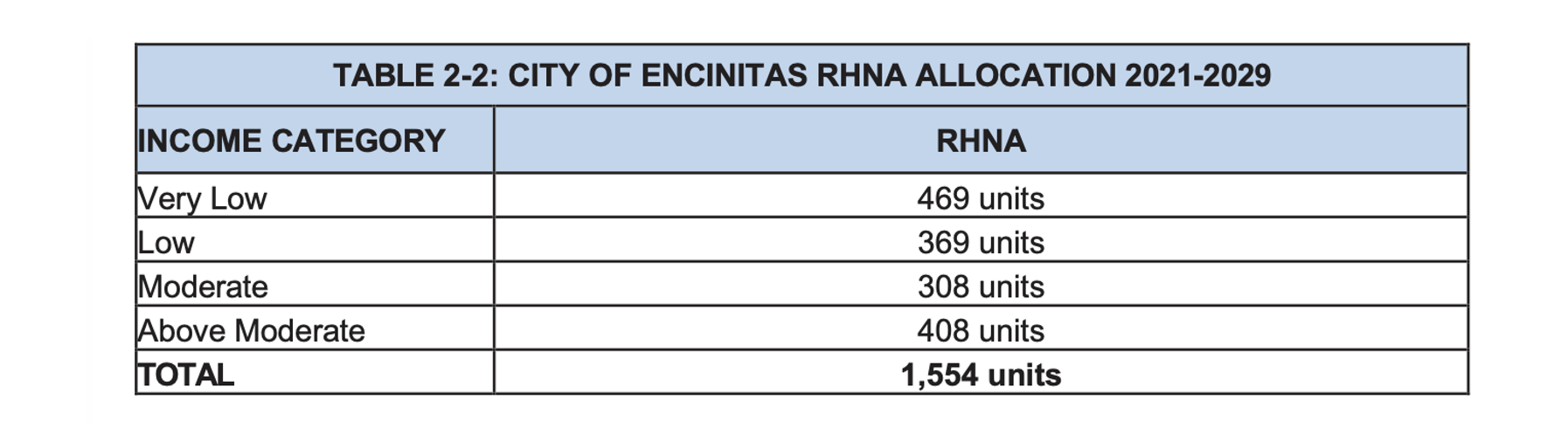
The city council adopted the 6th Cycle Housing Element in April 2021. The city added no new sites and no new upzoning. Therefore, no Prop A vote was required. The site list was a recalculated subset of the inventory in the 5th Cycle Housing Element.
In July 2021, HCD found the document to be in substantial compliance.[29] On paper, that was a major milestone. In practice, it did not end the conflict, because compliance depends not only on adopting a plan but also on carrying it out in ways that remain consistent with state law.
2021: THE CITY’S LAWSUIT TO INVALIDATE PROP A COMES TO AN END
The court order that produced the 2019 Housing Element came with a condition. HCD would only find that element compliant if the city committed, in a program under section 3C, to “take necessary action(s) to amend or invalidate Prop A, relevant to state housing laws.” Because Judge Frazier had preempted Prop A for the 5th Cycle only, the commitment could only operate against the 6th Cycle and beyond. The city complied by filing suit on September 6, 2019, naming the residents’ group that had sponsored the original 2013 initiative as the defendant.[30]
Then the city didn’t serve the complaint—the lawsuit sat on file with Program 3C satisfied on paper but not prosecuted. HCD refused to accept that. In February 2020, it threatened to revoke the fifth-cycle certification and formally took the position that Prop A was “void in its entirety, both facially and as applied.” The city amended its complaint in March 2020 to name HCD as a “friendly” defendant.[31] The friendly caption masked a real disagreement: the city sought a narrow carve-out that would preserve Prop A for everything except housing-element adoption, while HCD’s position was that the whole initiative was void. Preserve Prop A intervened with privately funded counsel to defend the initiative.
On August 26, 2021, Judge Earl H. Maas III denied the city’s request. He wrote that a city “does not have the authority to amend Prop A’s requirements; only the voters have that authority,” and that “[i]nvalidating the citizens’ right to vote should only be a last resort.”[32] Neither the city nor the state appealed. Proposition A remains fully in effect today. What survives is Program 3C itself, which committed the city to a fallback plan: build enough capacity buffer that no mid-cycle upzoning is needed, complete an inclusionary feasibility study, and — as a last resort — put a measure on the ballot asking voters themselves to amend Prop A. HCD certified the 6th Cycle Housing Element with the litigation still pending precisely because those fallback commitments applied “regardless of the court’s ultimate determination.”
2021 TO 2022: GOODSON DEVELOPMENT – THE STATE WARNS ENCINITAS THAT COMPLIANCE ON PAPER IS NOT ENOUGH
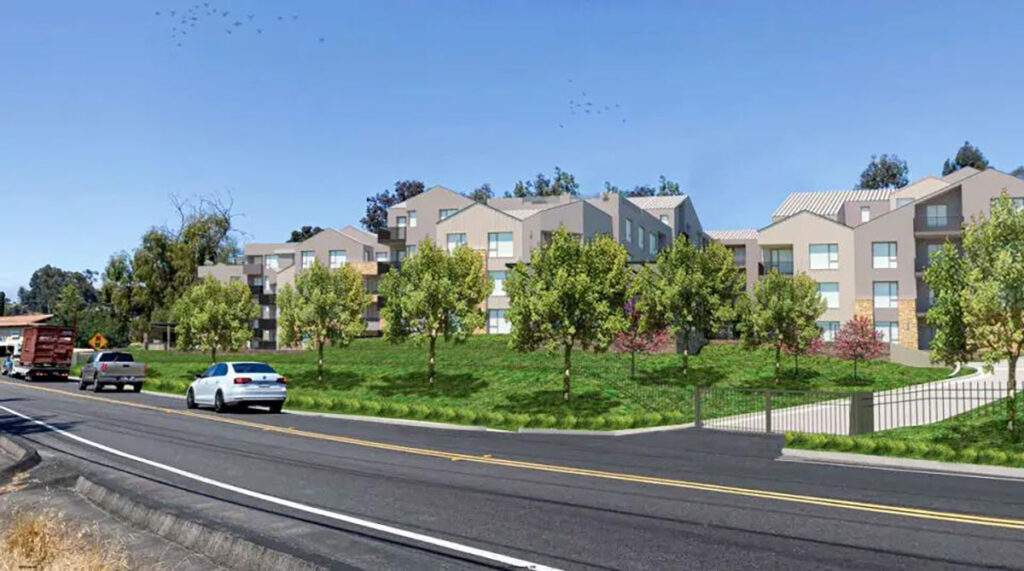
With certified zoning in place, the projects came. Between late 2020 and 2024, the Planning Commission and council processed a generation of multifamily projects on the rezoned sites — Fox Point Farms (250 units), Encinitas Boulevard Apartments (277 proposed), Dos Lunas (202), Clark Avenue Apartments (199), Sunshine Gardens (140), Piraeus Point (149 as entitled), Marea Village (94), Camino Apartments (87), and others — most processed by-right, most claiming density bonuses.[33] Nearly every approval was appealed to the City Council by residents. Every such appeal was denied.
State housing law increasingly requires cities to review qualifying housing projects using objective standards rather than subjective judgments about neighborhood character or aesthetics.
That tension became explicit in what is often called the Goodson Project, formally Encinitas Boulevard Apartments. Developer R. Randy Goodson proposed a 277-unit apartment complex with 41 lower-income units on a site at the southern edge of Olivenhain, between Rancho Santa Fe Road and McClain Road. The site had been included in the city’s housing element since 2018, and the project relied on the State Density Bonus Law.[34] On November 10, 2021, the City Council voted unanimously to uphold the Planning Commission’s denial of the project. This appeal denial was the only one ever sustained, but it only lasted seven months.
On January 20, 2022, HCD issued a Notice of Violation finding that the denial violated the State Density Bonus Law, the Housing Accountability Act, Housing Element Law, and the city’s obligation to affirmatively further fair housing.[35] On March 24, 2022, California Attorney General Rob Bonta sent a letter to Mayor Catherine Blakespear warning that the state was “prepared to take immediate steps” if the city did not approve a revised version.[36] Goodson sued the city, and in April 2022 the parties reached a settlement reducing the total units to 250 while increasing the affordable units from 41 to 50. On June 8, 2022, the Council unanimously approved the revised project[37]. The message from the episode was that a compliant housing element does not insulate a city if its later actions undermine the state’s housing framework.
2024 TO 2025: QUAIL MEADOWS
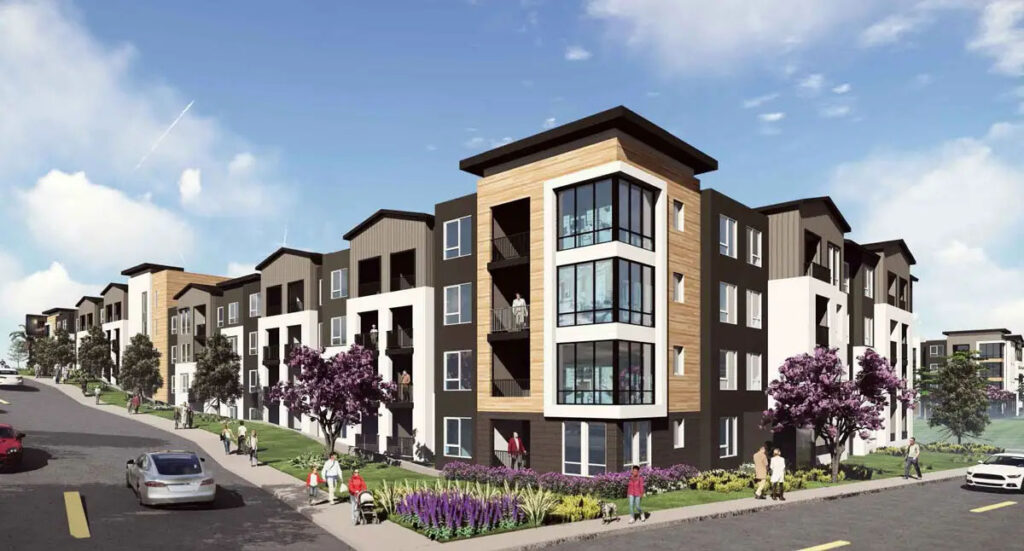
The site at 185–225 Quail Gardens Drive, owned by Baldwin & Sons, was identified in the 2021–2029 Housing Element to accommodate at least 225 lower-income units. The developer’s original proposal—485 units in six-story buildings with 72 affordable units—drew sustained community opposition over traffic, scale, and fire-evacuation concerns on a two-lane road also serving Fox Point Farms, Sunshine Gardens, and Moonlight Apartments.[38] The revised proposal reduced the total to 448 units in four-story buildings while increasing the affordable share to 90 units (25 percent of the project’s base density), exceeding the 15 percent local inclusionary requirement.[39]
On October 3, 2024, the Planning Commission ministerially approved the project as a by-right development under state law. In early 2025, two community groups appealed—Supporters Alliance for Environmental Responsibility (SAFER) and Encinitas Citizens for Responsible Development. On February 12, 2025, the City Council voted 3–1 to deny the appeals and uphold the Planning Commission’s approval, making Quail Meadows the largest apartment complex in city history.[40] HCD had sent a letter on the eve of the council hearing warning that delay or denial could constitute a state housing law violation.
TODAY: COMPLIANCE REMAINS A MOVING TARGET, AND AFFORDABILITY IS STILL THE HARDEST PROBLEM
The City has done an annual progress report on the implementation of the General Plan including an update on the Housing Element progress.[41] Some highlights:
- 12 of the 15 designated R-30 Housing Element sites (6th Cycle Housing Element) are currently in process with the City.
- The City has achieved 29% of its very low-income allocation (137 units), 21% of its low-income allocation (137 units), 48% of its moderate-income allocation (147 units) and 295 percent of its above moderate-income allocation (1,206 units)
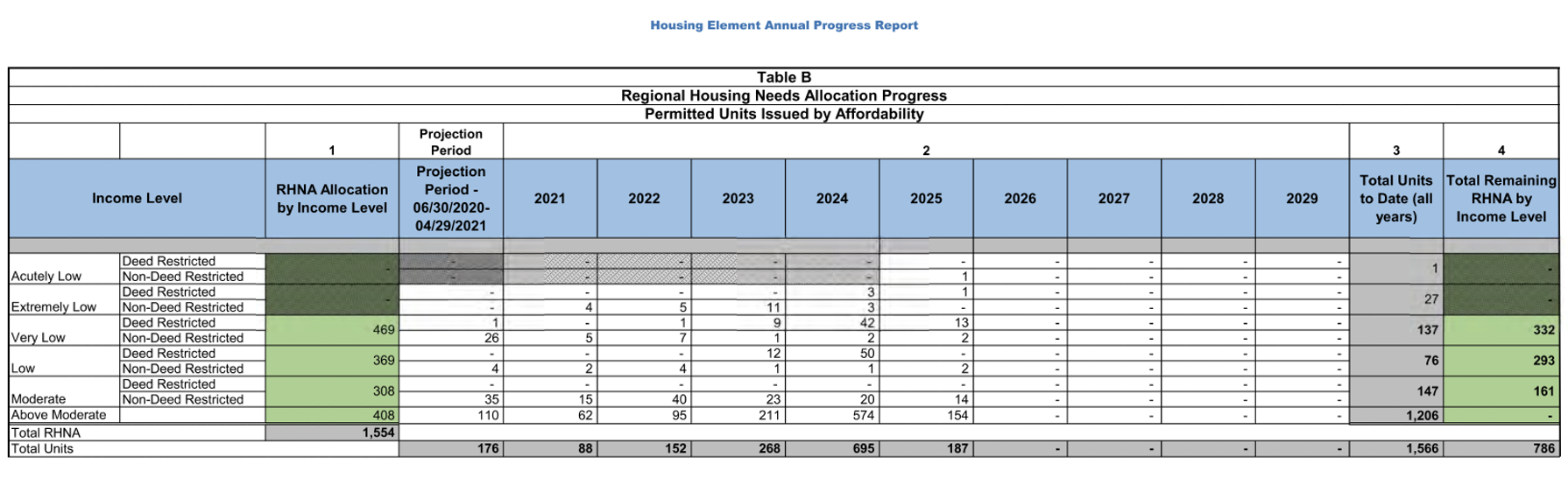
As sites are approved, built, or developed at different densities than originally projected, the city must continue monitoring whether it still has enough realistic capacity to meet lower-income housing obligations.
The “No Net Loss” statute (SB 166 of 2017, Government Code section 65863) requires a city to maintain adequate sites throughout the planning period. In most cities a mid-cycle rezone is a council hearing. In Encinitas, under Prop A, it is a citywide election. The 6th Cycle Housing Element carries a documented 62% lower-income buffer specifically to avoid being driven back to the ballot mid-cycle.
In June 2024, the city launched an Affordable Housing Task Force to study affordability, RHNA obligations, and ways to expand affordable housing. The Task Force presented its findings in November 2024, and a Planning Commission subcommittee picked up the work in March 2025 to recommend strategies for closing the low-income housing gap.
The November 2024 election remade the council. Prop A’s author Bruce Ehlers was elected mayor, joined by new council members in Districts 1 and 2 on campaign themes of resistance to state housing mandates. The election was, among other things, a referendum on the by-right era. Interestingly, this Council has approved all of the housing developments that have come before them.
No council, of any political composition, has yet found a lawful path to denying these projects. Councils featuring majorities on opposite political sides — the 2016 through 2024 majorities and the post-2024 majority — have faced the same state statutes and produced materially similar results. Every resident’s appeal has been denied. The one Planning Commission denial ever sustained on appeal was reversed by settlement within seven months under state enforcement pressure. Two councils elected on very different mandates have now navigated the same state legal framework, and the pattern of outcomes on qualifying by-right projects has held across both. What a council can and cannot change on its own deserves honest discussion.
PHASE 4: WHY IT MATTERS
- Goodson and Quail Meadows together show how the new legal reality plays out on the ground. Encinitas still has local discretion, but it is narrower than many voters assume, especially when a project qualifies for state protections.
- What RHNA means is often misunderstood. The city must identify enough legal capacity to accommodate that amount of housing. It does not have to build it and generally cannot make private developers do so on any particular timeline.
- It is one thing to say Encinitas must plan for affordable housing. It is another thing to identify sites, financing, incentives, development standards, and legal pathways that actually produce it.
- The 7th Cycle Housing Element, due around 2029, will arrive in the most state-regulated environment in California planning history and, on present law, will again require either no new upzoning or a Prop A vote.
CONCLUSION: WHAT THE ENCINITAS HOUSING DEBATE IS ABOUT

At this point, the debate in Encinitas is no longer simply about whether residents support or oppose new construction. It is about how much local discretion remains, how Prop A fits within that legal framework, and why affordable housing is far harder to finance and produce than political rhetoric often admits. It is also about a persistent communication gap: residents are often told the city can “just say no,” when in many cases the law leaves far less room to refuse than people assume.
ENDNOTES
[1]“Town of San Dieguito Voted Down 30 Years Ago,” The Coast News, June 5, 2012
[2] “Encinitas Celebrates 25 Years of Incorporation,” The Coast News, October 6, 2011
[3] “Tale of Incorporation: How Encinitas Became An Entity Onto Itself 25 Years Ago,” Patch, August 16, 2011
[4] U.S. Housing and Urban Development, Consolidated Plan for 1995 for the City of Encinitas Executive Summary
[5] Bruce Ehlers, “Commentary: Proposition A turns 10,” The Coast News, June 2023 (Ehlers’ own account of authorship); contemporaneous accounts identifying Everett DeLano as drafter of the initiative text.
[6] Hernandez v. City of Encinitas (1994) 28 Cal.App.4th 1048
[7] U.S. Housing and Urban Development, Encinitas, CA, Consolidated Plan for 1995, Executive Summary
[8] City of Encinitas, 2005-2010 Housing Element (adopted by Resolution 2006-48), production data and regional need allocation
[9] “General Plan Update: Housing Proposal Goes Back to the Drawing Table,” Patch, March 8, 2012
[10] “General Plan Update: Housing Proposal Goes Back to the Drawing Table,” Patch, March 8, 2012 and “Encinitas Divided over Growth,” KPBS, May 28, 2013
[11] Bruce Ehlers, “Commentary: Proposition A turns 10,” The Coast News, June 2023 (Ehlers’ own account of authorship); contemporaneous accounts identifying Everett DeLano as drafter of the initiative text.
[12] “Encinitas Divided over Growth,” KPBS, May 28, 2013
[13] Official sample ballot, June 18, 2013 special election: Ballotpedia, “City of Encinitas Voter Approval for Zoning/Planning Amendments, Proposition A (June 2013)”
[14] San Diego County Registrar of Voters certified results, reported by Patch on June 27, 2013
[15] Settlement agreement and stipulated judgment in Case No. 37-2014-00034550 (July 2015)
[16] Ballot argument signatories per the official voter information pamphlet, November 2016 (San Diego County Registrar of Voters; PRA production, June 2026)
[17] Official voter information pamphlet, November 2016
[18] San Diego County Registrar of Voters, Official Canvass, November 8, 2016 General Election: Measure T – No 17,943 (55.92%), Yes 14,144 (44.08%)
[19] Registers of Action, Case Nos. 37-2017-00013257 and 37-2017-00023267 (stay of April 30, 2018, pending the November 2018 ballot measure)
[20] City of Encinitas, Measure U Housing Element record, 2017-2018 (draft submitted to HCD April 13, 2018)
[21] City of Encinitas Ordinance 2018-03 (introduced June 13, 2018; adopted August 8, 2018.)
[22] San Diego County Registrar of Voters certified results, via Ballotpedia
[23] Ruling of the Hon. Ronald F. Frazier, San Diego Superior Court, December 12, 2018, in San Diego Tenants United v. City of Encinitas (No. 37-2017-00013257-CU-WM-NC) and BIA of San Diego County v. City of Encinitas (No. 37-2017-00023267-CU-WM-NC)
[24] Cal. Gov. Code § 65583.2(h)–(i); EMC Chapter 30.09, zoning use matrix Note 35 (enacted by Ordinance 2019-04)
[25] Cal. Gov. Code § 65915 (State Density Bonus Law), including § 65915(e).
[26] SB 330 (Skinner, Stats. 2019) (Housing Crisis Act); SB 167/AB 678/AB 1515 (Stats. 2017) (Housing Accountability Act amendments); SB 9 and SB 10 (Stats. 2021); AB 2011 and SB 6 (Stats. 2022).
[27] Cal. Gov. Code § 65589.5(d)(5) (Housing Accountability Act, 1990). On its post-2021 practical activation, see “A Primer on California’s ‘Builder’s Remedy’ for Housing,” UC Davis School of Law.
[28] City of Encinitas 6th Cycle Housing Element 2021–2029, allocated by SANDAG.
[29] Certification letter dated July 13, 2021, available on hcd.ca.gov
[30] First Amended Complaint, City of Encinitas v. California Department of Housing and Community Development, No. 37-2019-00047963-CU-OR-NC (dated March 6, 2020; electronically filed March 10, 2020)
[31] First Amended Complaint, City of Encinitas v. California Department of Housing and Community Development, No. 37-2019-00047963-CU-OR-NC (dated March 6, 2020; electronically filed March 10, 2020)
[32] City of Encinitas v. California Department of Housing and Community Development, San Diego Superior Court Case No. 37-2019-00047963-CU-OR-NC; order of the Hon. Earl H. Maas III denying declaratory and injunctive relief, August 26, 2021 (quotations per the order as reported with the order document in The Coast News, August 28, 2021)
[33] City of Encinitas Planning Commission and City Council records, 2020–2024.
[34] “After yearslong tussle, Encinitas approves revised Goodson Project,” The Coast News, June 13, 2022
[35] HCD letter to City Manager Pamela Antil, available on hcd.ca.gov
[36] Office of the Attorney General press release, March 24, 2022
[37] “Encinitas approves revised housing project after state warns of action,” San Diego Union Tribune, June 9, 2022
[38] “Encinitas approves revised Quail Meadows Apartments project,” The Coast News Oct. 7, 2024 and “Encinitas plans to challenge state’s housing mandates,” KPBS, April 4, 2025
[39] “Encinitas approves revised Quail Meadows Apartments project,” The Coast News Oct. 7, 2024
[40] “The Encinitas City Council Reluctantly Approves The Quail Meadows Development,” Encinitas Ranch Community Association Newsletter, February 14, 2025