Want a deeper dive? Full Timeline Here.
Encinitas’s housing debate is really a long-running conflict between local control and increasingly binding state housing law.
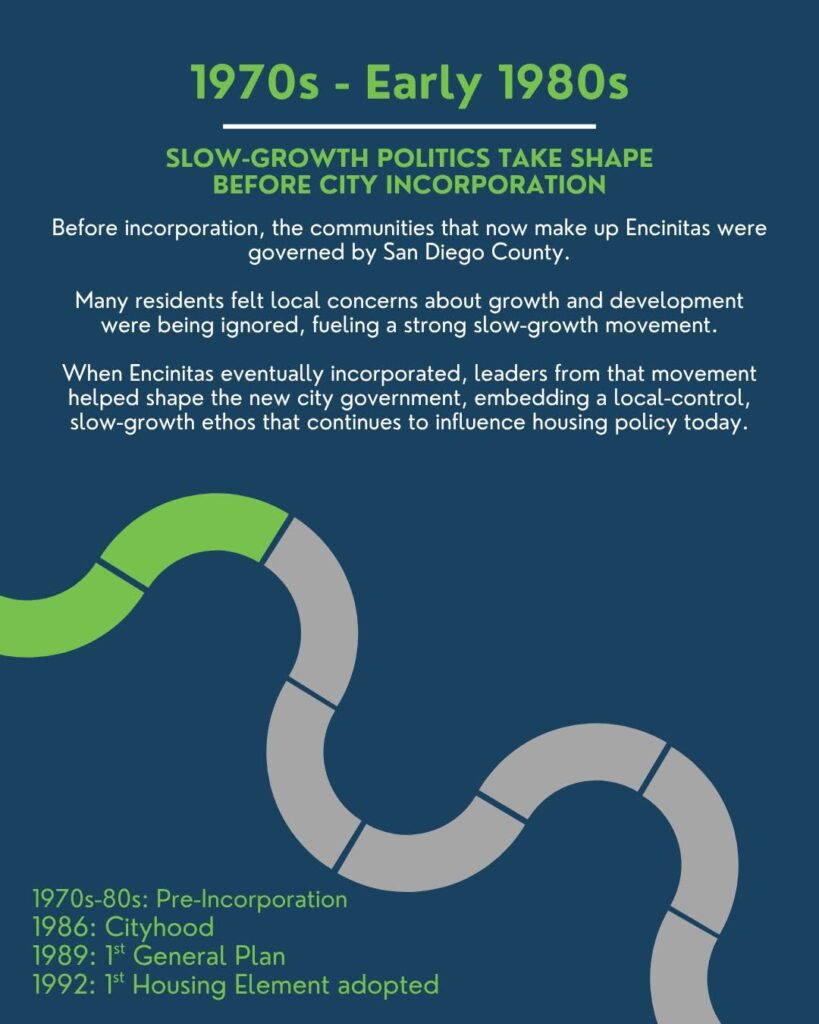
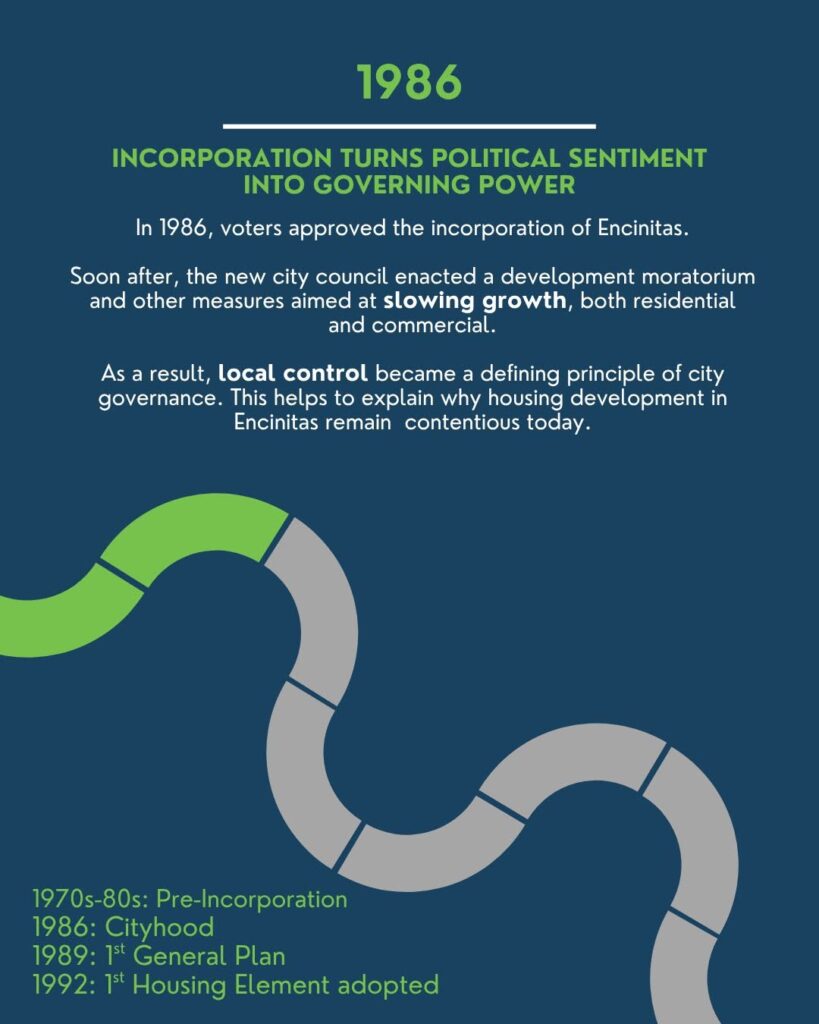
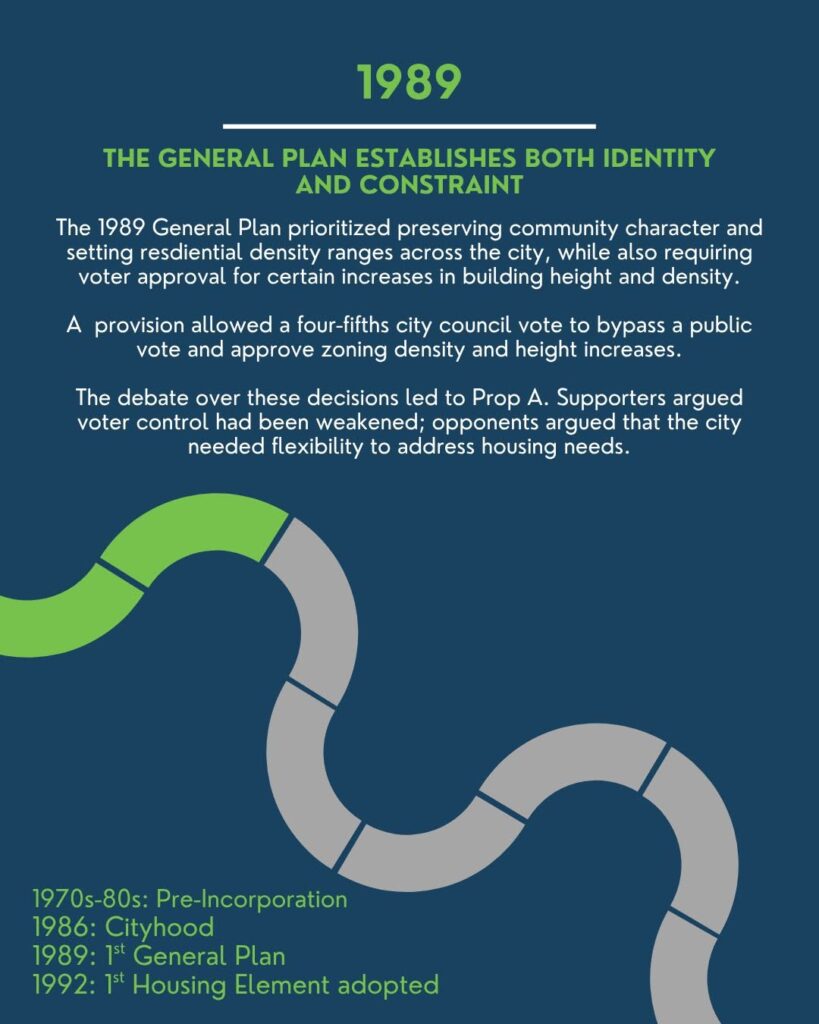
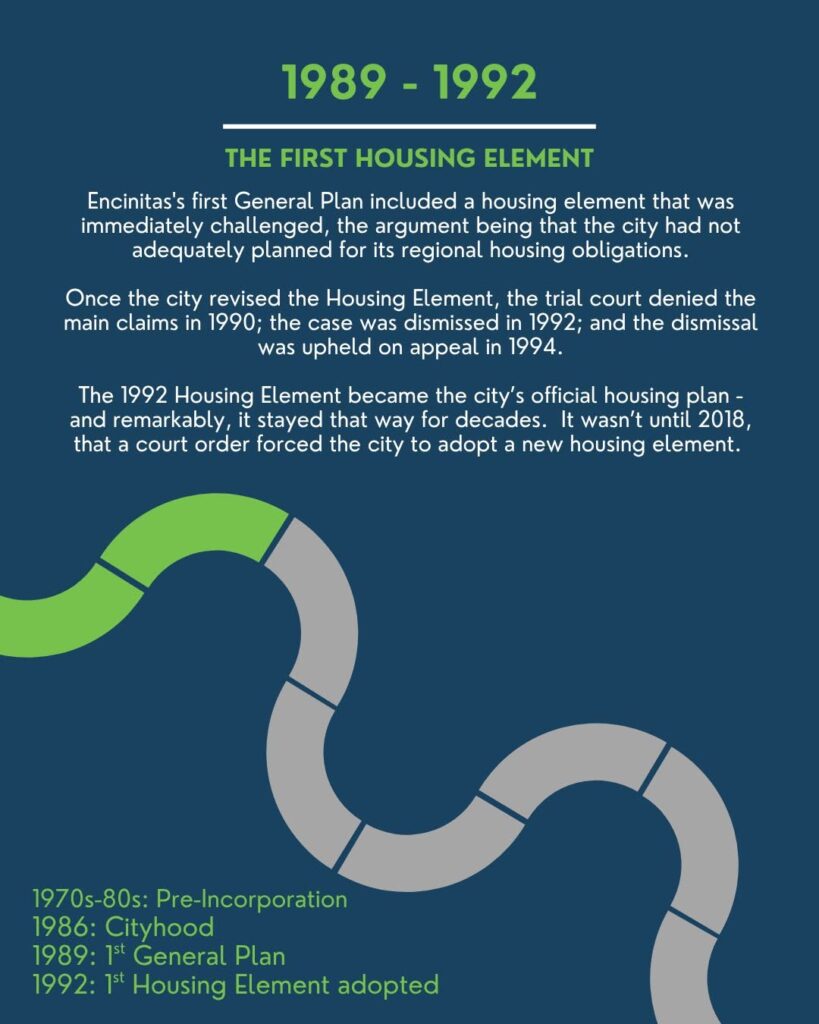
The city incorporated in 1986 with strong slow-growth sentiment, and its 1989 General Plan emphasized neighborhood character and limited higher-density housing. But California was steadily strengthening requirements that cities plan and zone for their share of regional housing.
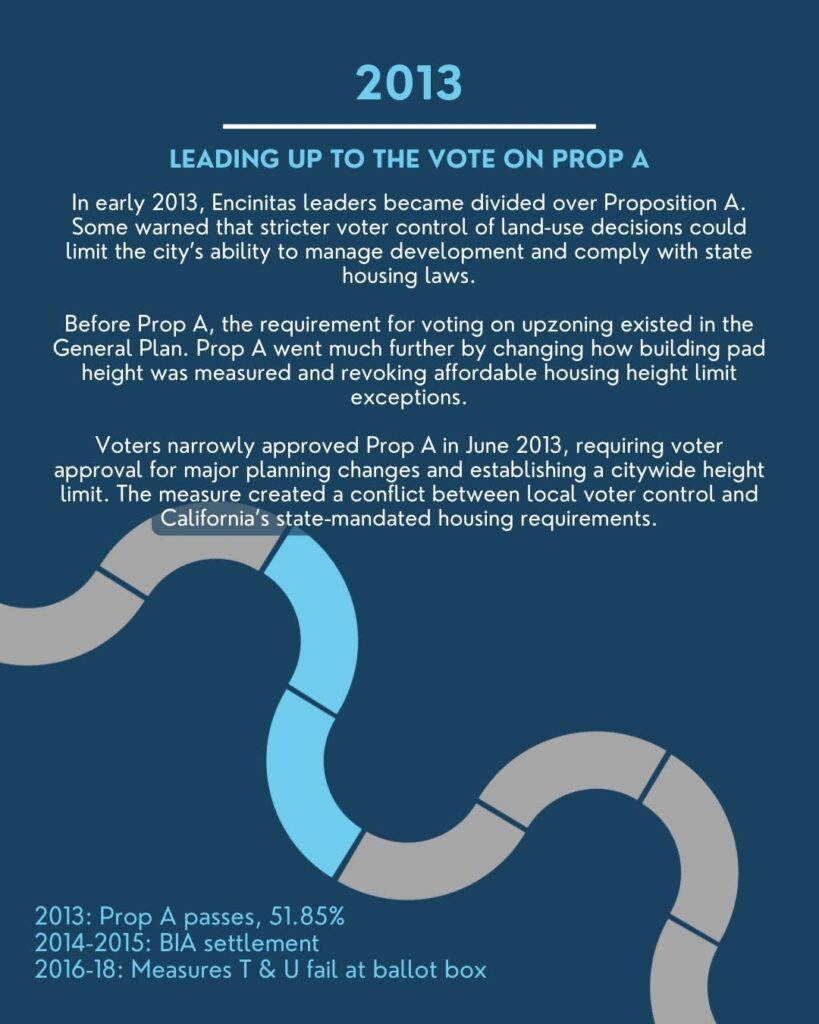
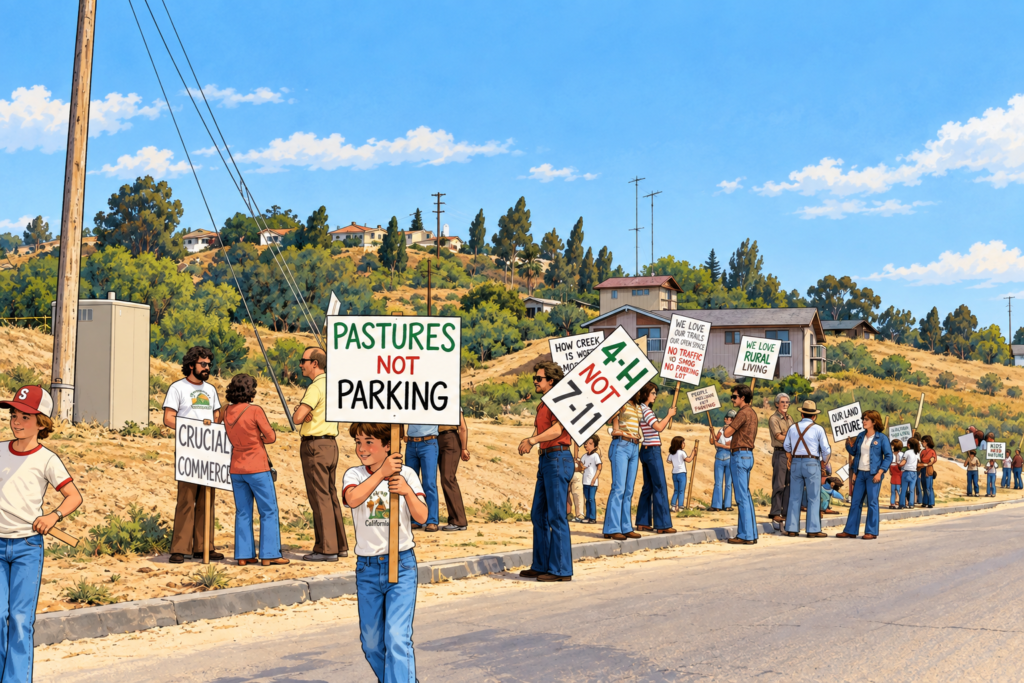
That conflict sharpened in 2013, when voters approved Proposition A, requiring voter approval for major density and height increases. Supporters saw it as a safeguard for local control, but it made state housing compliance more difficult.
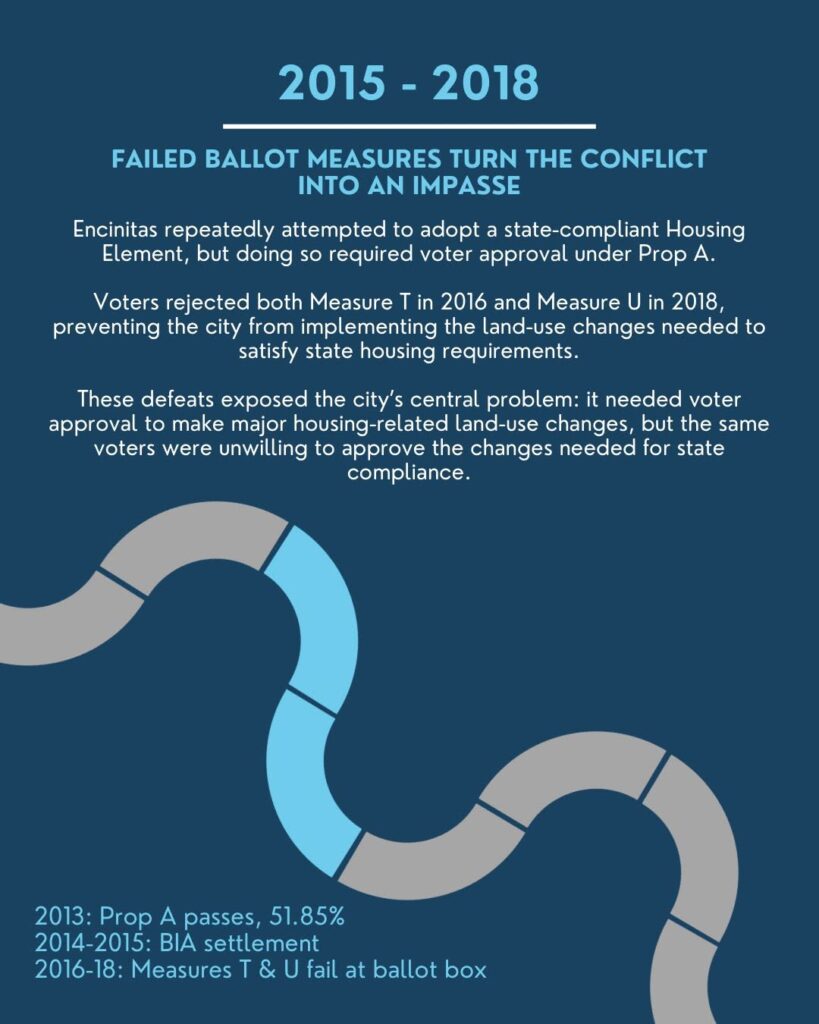
Encinitas then failed twice to win voter approval for housing plans. Measure T failed in 2016, and Measure U failed in 2018. The city was caught between state requirements to provide enough housing capacity and a local law requiring voters to approve the necessary zoning.
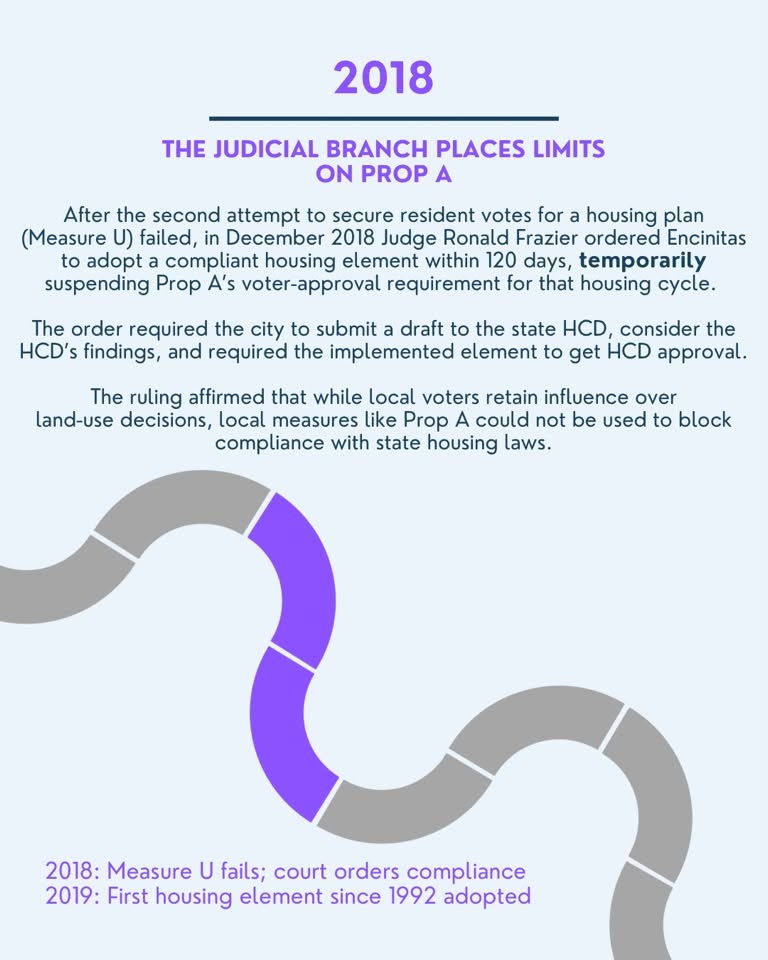
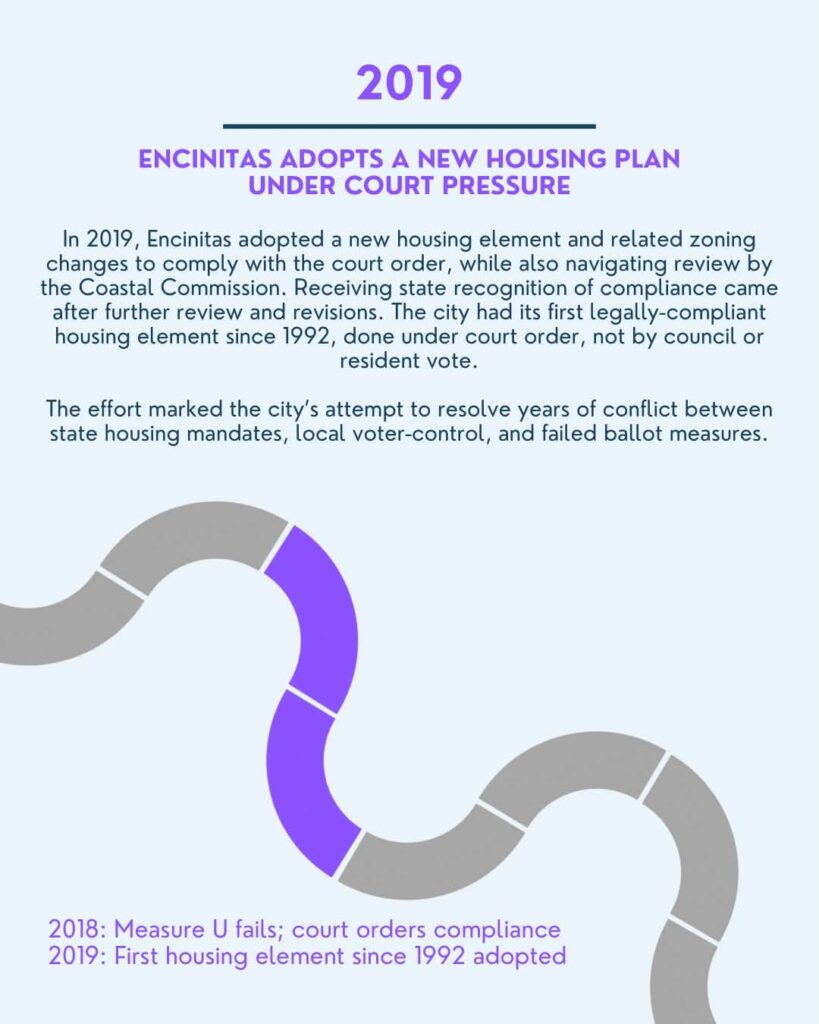
After Measure U failed, a judge ordered Encinitas to adopt a compliant Housing Element and temporarily suspended Prop A’s voting requirement for that housing cycle. In 2019, the city rezoned 19 privately owned sites for higher-density housing.
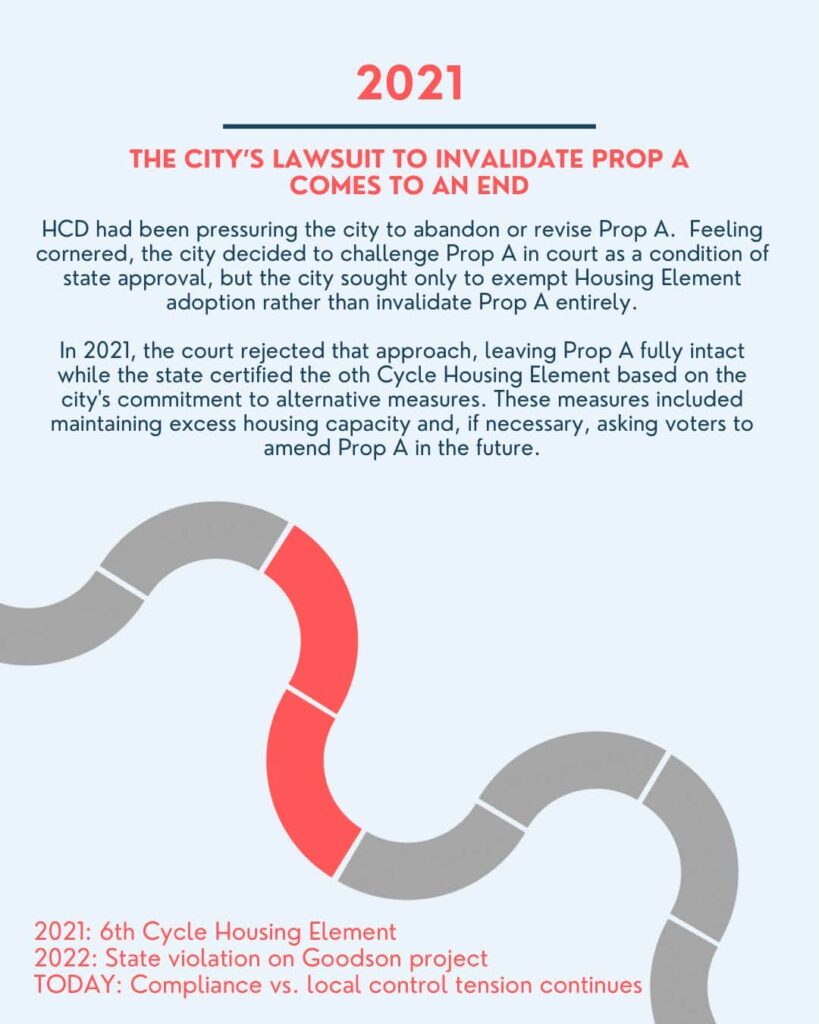
That did not invalidate Prop A. In 2021, another judge rejected the state’s effort to eliminate it entirely. Prop A remains in effect today, but it cannot be used to prevent Encinitas from complying with state housing law.
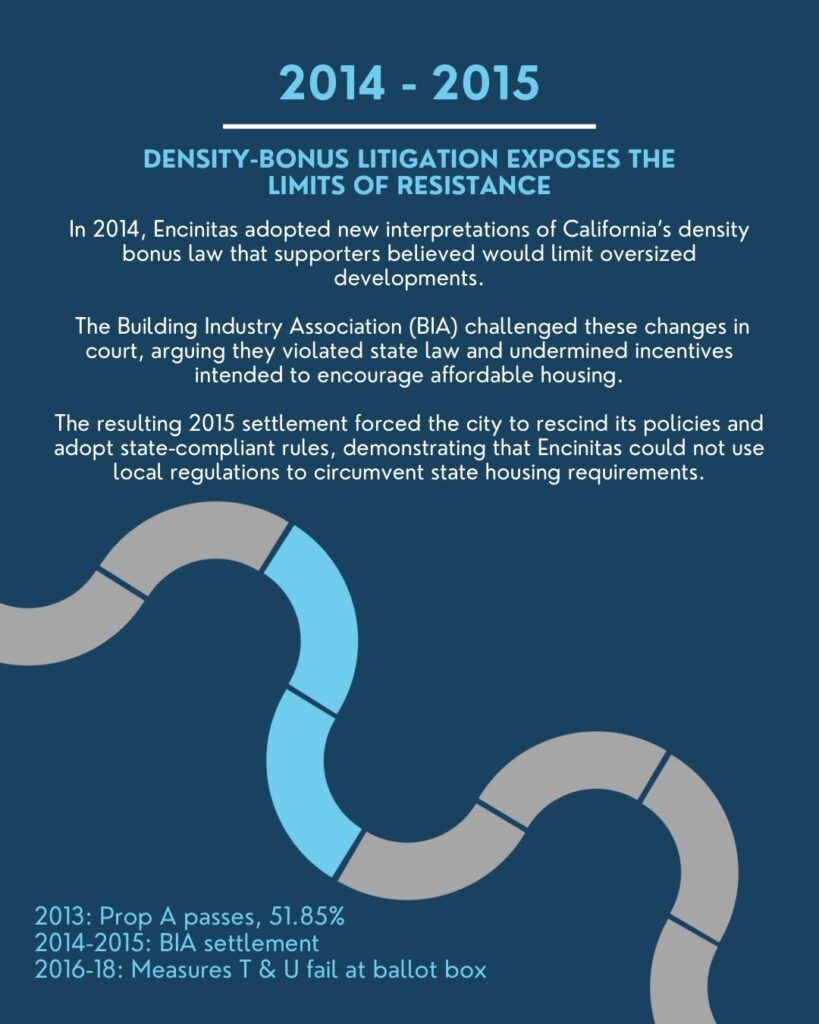
At the same time, state laws increasingly limited the city’s discretion over individual projects. Density Bonus Law allows qualifying projects to exceed underlying density and obtain waivers from some development standards, while “by-right” rules can restrict local review largely to objective standards.
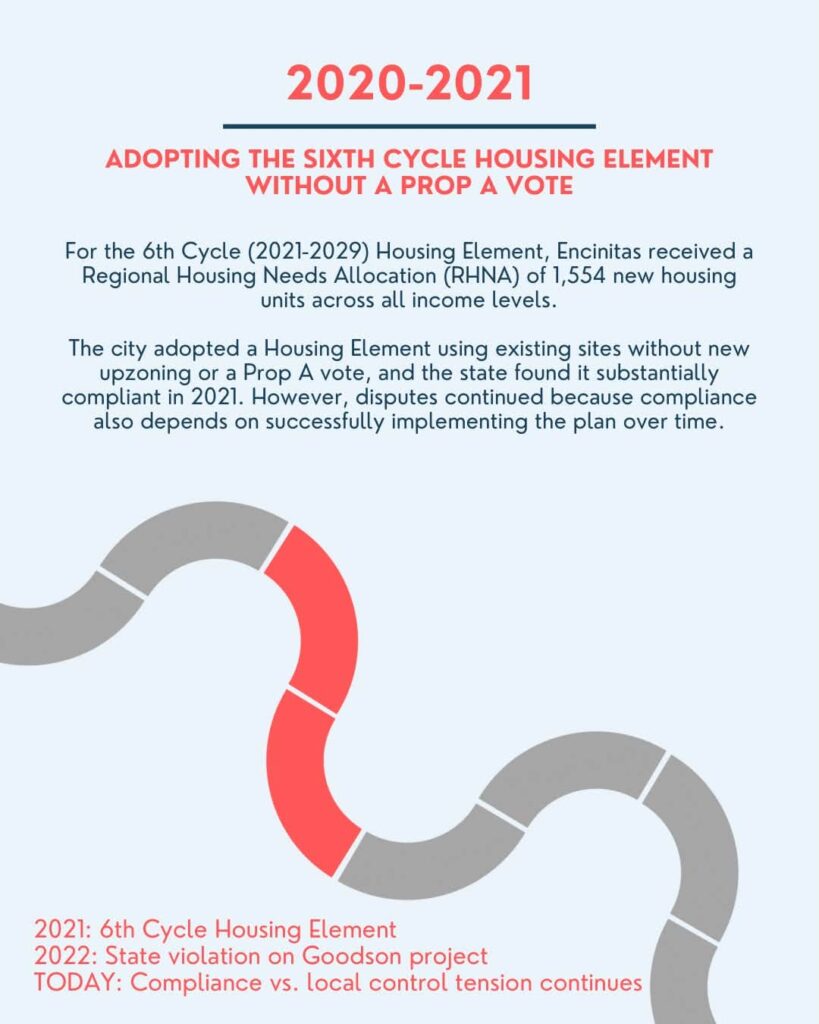
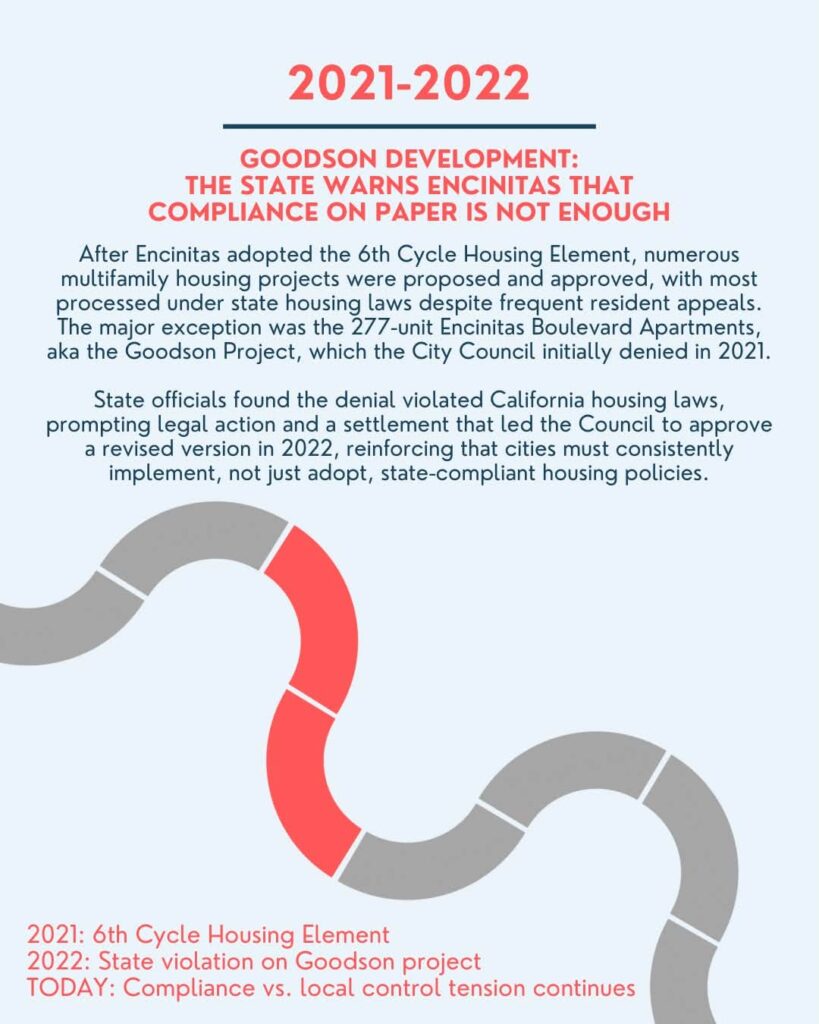
The Goodson project illustrated that shift. The council initially denied the proposed development, but state officials warned that the denial violated housing law. After negotiations, the city approved a revised 250-unit project in 2022.
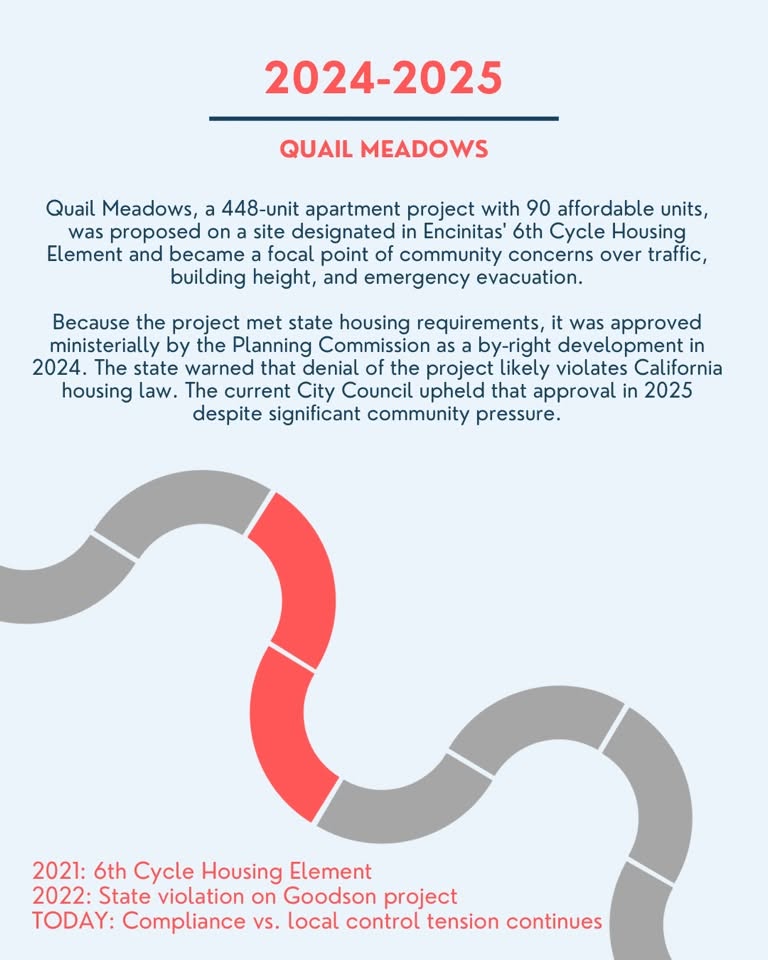
The same dynamic resurfaced at Quail Meadows. A revised 448-unit project was approved despite strong community opposition, with state officials again warning that denial or delay could violate state law.
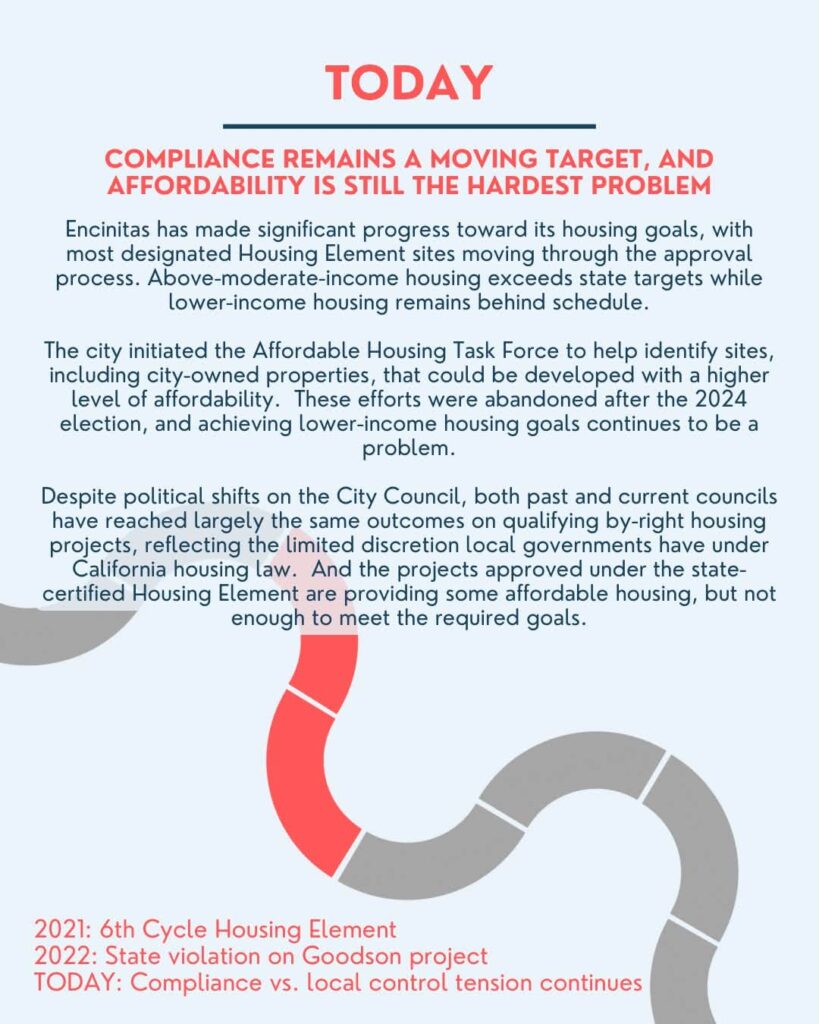
Encinitas therefore still has local land-use authority, but less than it once did.